
Generative Engine Optimization (GEO): Technical Architecture for AI Search Engines
Short answer
Generative Engine Optimization (GEO) aligns web application architecture with the retrieval and synthesis mechanisms of AI search engines such as Perplexity, ChatGPT Search, Claude, and Gemini. Unlike traditional keyword-density SEO, GEO focuses on 40–70-word direct-answer blocks, structured JSON-LD entity graphs, server-rendered semantic HTML, and verifiable data tables that AI models parse and cite as authoritative source references.
From Keyword Indexing to Retrieval-Augmented Grounding
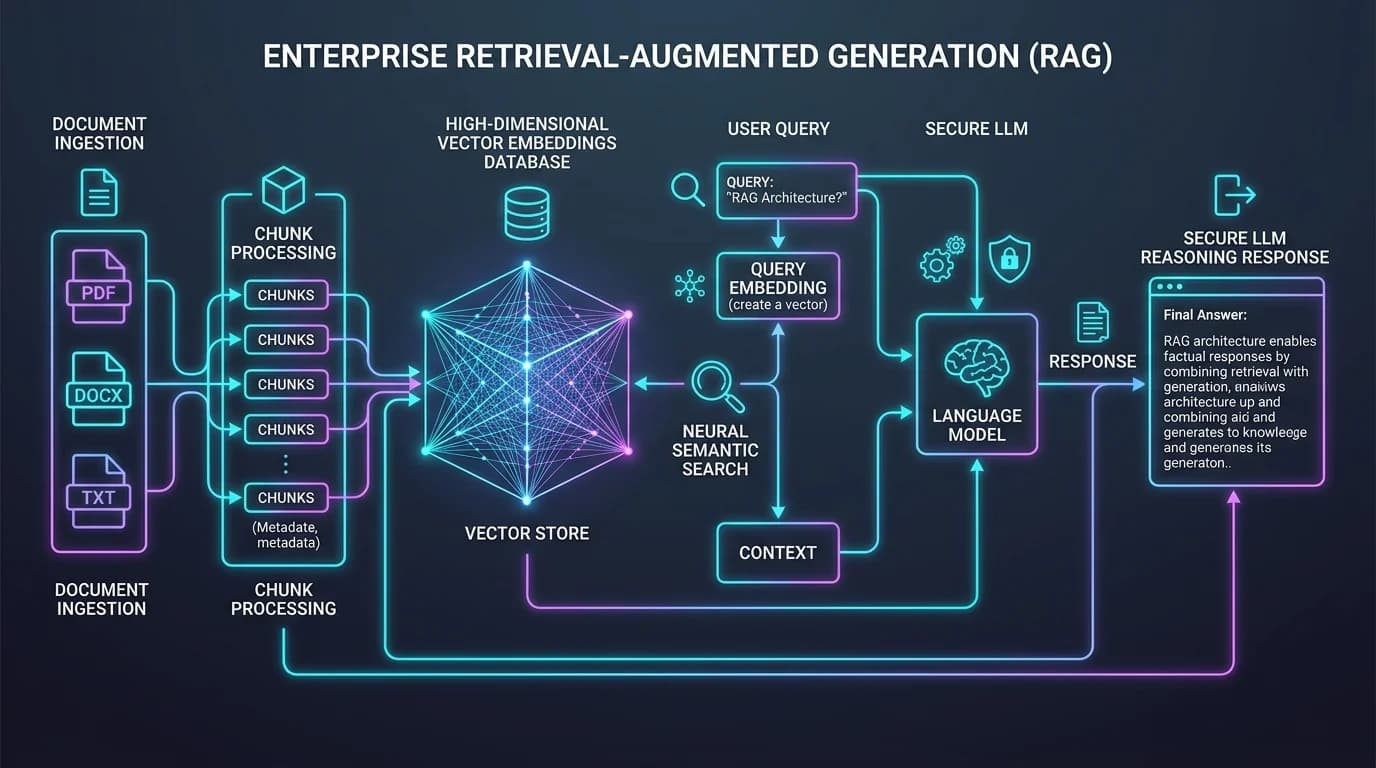
The search landscape is undergoing a structural shift. Where traditional search engines crawl web pages to calculate keyword relevance and backlink PageRank, modern generative answer engines operate as retrieval-augmented synthesis systems.
When a user asks a complex question in Perplexity, ChatGPT Search, or Google AI Overviews, the engine does not merely provide a list of blue links. It dispatches specialized web crawlers (such as GPTBot, ClaudeBot, or PerplexityBot), extracts contextually relevant passages, and synthesizes a direct response with superscript citations.
Generative Engine Optimization (GEO) is the engineering discipline of structuring web applications so AI retrieval pipelines can crawl, interpret, and cite your content with high confidence.
The Four Technical Pillars of Generative Engine Optimization
Achieving high citation frequency across AI answer engines requires four core architectural practices:
- Answer-First Content Architecture: Positioning a self-contained 40–70-word factual answer directly beneath the primary heading inside dedicated semantic containers.
- Rich JSON-LD Entity Graphing: Providing comprehensive structured data (SoftwareApplication, FAQPage, BreadcrumbList, Organization) with speakable CSS selectors.
- Headless Crawler Rendering Parity: Ensuring that all critical text, tables, and comparison points exist in the server-rendered HTML payload before client-side hydration.
- High-Density Numerical & Tabular Data: Utilizing structured comparison tables, specific architectural benchmarks, and objective data points that AI models quote verbatim.
Comparison: Traditional SEO vs. Answer Engine (AEO) vs. Generative Engine (GEO)
| Optimization Vector | Traditional SEO | Answer Engine Optimization (AEO) | Generative Engine Optimization (GEO) |
|---|---|---|---|
| Primary Target | Googlebot & Bingbot Web Crawlers | Featured Snippets & Knowledge Cards | LLM Retrieval Pipelines & Synthetic Answers |
| Content Strategy | Keyword density & long-form articles | Direct Q&A definitions and FAQ schema | Fact-dense tables, modular data, and citable blocks |
| Measurement Metric | Search ranking & organic click-through | Snippet impressions & voice answer share | AI source citation count & recommendation rate |
| Information Extraction | Meta tags, H1-H3 headers, and backlinks | Speakable markup and concise answer boxes | RAG context windows, token embeddings, and entity graphs |
Engineering Content for AI Citability
Generative models favor sources that provide clear, unambiguous claims free of promotional rhetoric. When an article contains hyperbolic superlatives or vague assertions, answer engines struggle to parse factual truth and frequently ignore the source.
By replacing subjective marketing copy with concrete technical specifications, pricing comparison frameworks, and structured tables, software developers make their documentation and product pages ideal citation targets for AI synthesis.
Frequently Asked Questions
Frequently Asked Questions
How does robots.txt impact AI search crawler visibility?
Robots.txt directives control whether crawler user-agents like GPTBot, ClaudeBot, and PerplexityBot are permitted to scrape your site. Allowing these crawlers ensures your pages are indexed for AI synthesis.
Why is server-side rendering (SSR) essential for GEO?
Many AI search crawlers do not execute complex JavaScript during web fetching. If content is rendered exclusively on the client side, AI crawlers will index an empty page and fail to cite it.
What role does an llms.txt manifest play in generative search?
An llms.txt file serves as a curated markdown roadmap that points AI crawlers directly to your most informative architectural documentation and service pages without crawling redundant assets.
Explore Next
- See our ready-made software products
- Learn about our AI agent development services
Need Setup or Custom Coding?
Get in touch to rebrand or customize our ready-made products, or discuss custom development services. All quotes are customized and private.
Related Articles
Boutique Hotel PMS & Direct Booking: Eliminating High OTA Commissions
Discover how self-hosted hotel property management systems (PMS) capture direct bookings, synchronize room inventory, and eliminate recurring OTA commissions.
Coworking Space Management: Desk Booking, Turnstiles, and Invoicing
Manage flexible workspaces with self-hosted coworking software. Automate hot-desk reservations, IoT turnstile access control, and recurring member invoicing.