
SEO vs AEO vs GEO: The Unified AI Search and Visual Content Framework
Short answer
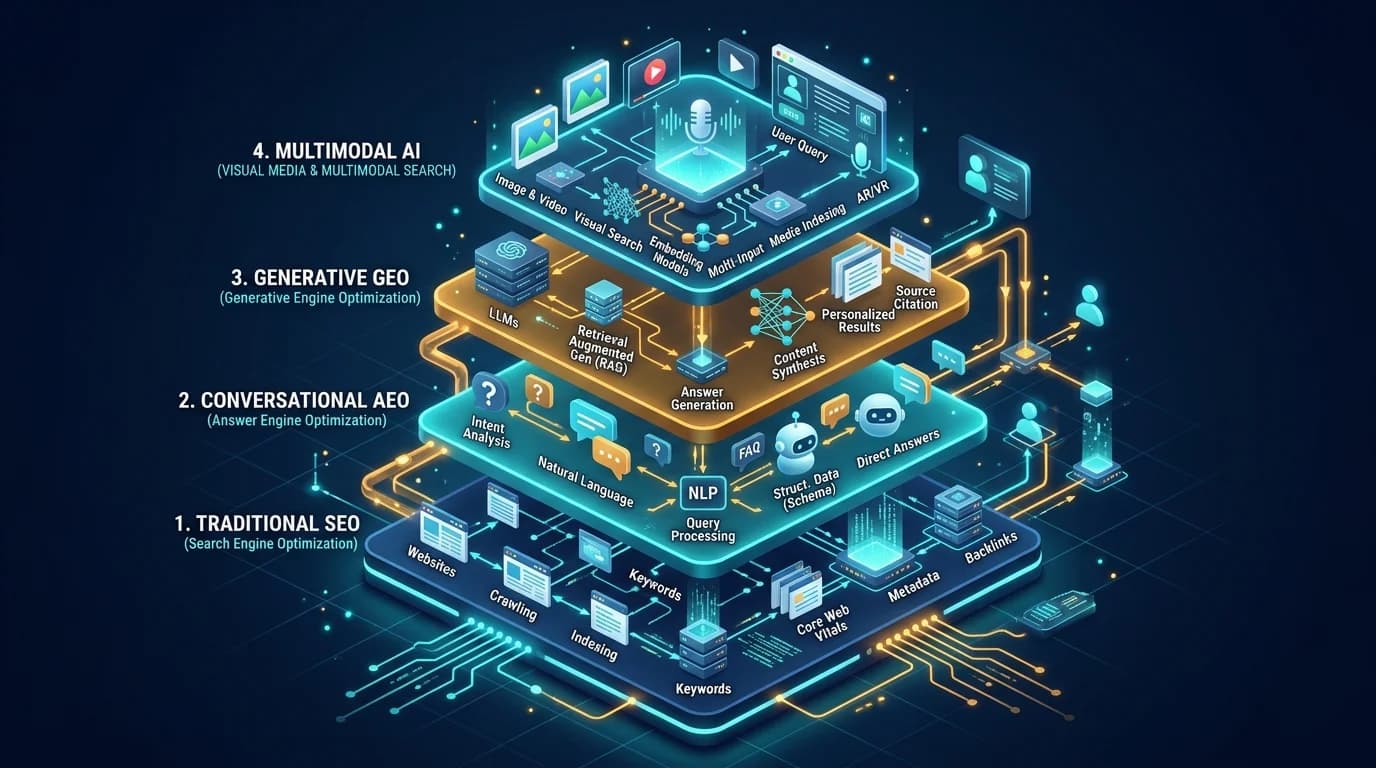
The unified AI search framework combines traditional search engine optimization, answer engine optimization, generative engine optimization, and multimodal media into a single operational architecture. Traditional SEO secures crawler indexing, AEO provides forty-word extractable answers for conversational agents, GEO establishes brand citations in LLM synthesis, and multimodal assets power visual search and multimodal AI retrieval across all search platforms.
The Convergence of Web Search and Artificial Intelligence
The digital landscape has fractured into multiple discovery channels. Modern customers no longer rely exclusively on typing keywords into a classic search box. Users ask follow-up questions in conversational AI assistants, search through smartphone camera lenses, and consume generative summaries compiled from multiple web sources in seconds.
Treating SEO, conversational AI optimization, and visual asset generation as separate silos leads to fragmented architectures and duplicate effort. Forward-thinking engineering teams unify these disciplines into an integrated pipeline.
The Four Layers of the Unified AI Search Stack
| Layer | Discipline | Primary Technical Asset | Target Discovery Mechanism |
|---|---|---|---|
| Layer 1 | Foundational Technical SEO | Clean HTML, fast SSR, XML sitemaps, robots.txt | Googlebot, Bingbot, web indexing crawlers |
| Layer 2 | Conversational AEO | 40–70 word direct answer boxes, FAQPage schema | ChatGPT Search, Perplexity answer cards, Google AI Overviews |
| Layer 3 | Generative GEO | Entity knowledge graph, statistical benchmarks, /llms.txt | Generative LLM synthesis, RAG retrieval embeddings |
| Layer 4 | Multimodal Media & AI Images | Optimized WebP visuals, prompt metadata, ImageObject | Google Lens, multimodal vision models, visual search engines |
Execution Blueprint: From Codebase to Citations
Implementing the unified framework across a web application involves four concrete engineering workflows:
- Automate Markdown Manifest Generation: Maintain automated scripts that compile product specifications into clean, token-efficient /llms.txt manifests whenever the catalogue updates.
- Enforce Answer-First Content Guidelines: Mandate that every service landing page and editorial article begins with an extractable 40 to 70 word definition resolving primary user intent.
- Deploy Nested Schema Architectures: Ensure every page emits complete structured data including Organization, Person, BreadcrumbList, and software-specific schemas.
- Standardize High-Performance Visual Assets: Generate and compress all explanatory diagrams and featured images into responsive WebP assets with descriptive alt text.
Measuring Success in the New Discovery Landscape
Traditional search analytics only measure organic click volume and keyword positions. A unified search architecture tracks additional modern signals: generative citation frequency, AI referral traffic, visual search impressions in Google Lens, and llms.txt crawl requests by AI agents.
By observing these multimodal signals concurrently, digital teams gain an accurate composite view of their market visibility across both algorithmic search crawlers and generative reasoning engines.
Frequently Asked Questions About the Unified Search Framework
Frequently Asked Questions
Should businesses abandon traditional SEO in favor of AEO and GEO?
No. Traditional SEO forms the foundation upon which AEO and GEO operate. Without sound technical SEO, fast server responses, and search indexation, AI engines cannot discover or verify your source content.
How does an llms.txt file integrate with the unified search stack?
An llms.txt file acts as a structured bridge between web pages and AI retrieval agents, offering clean markdown summaries that allow models to reference your platform without crawling noise.
Why is multimodal visual optimization important for software companies?
Modern vision models extract information from UI screenshots and architectural diagrams. High-quality visuals with descriptive metadata increase discovery across visual search and AI chat interfaces.
How frequently should unified search assets be refreshed?
Whenever product capabilities or software architecture updates, automated deployment pipelines should regenerate sitemaps, update /llms.txt manifests, and synchronize schema markup.
Need Setup or Custom Coding?
Get in touch to rebrand or customize our ready-made products, or discuss custom development services. All quotes are customized and private.
Related Articles
Multimodal SEO and AI Images: Prompting, Metadata, and Visual Search Indexing
A comprehensive guide to multimodal SEO: generating AI imagery, optimizing visual metadata, compressing WebP assets, and ranking in visual search and vision LLMs.
Australia & New Zealand Vehicle Rental: Eliminating Per-Vehicle Cloud Fees with Self-Hosted Fleet Software
Independent car, ute, and campervan rental operators in Australia and New Zealand pay heavy per-vehicle SaaS tariffs. Self-hosted rental software unites pre-authorization deposits, e-toll capture, and telematics.