
News Portal Software Requirements: Editorial to Monetization
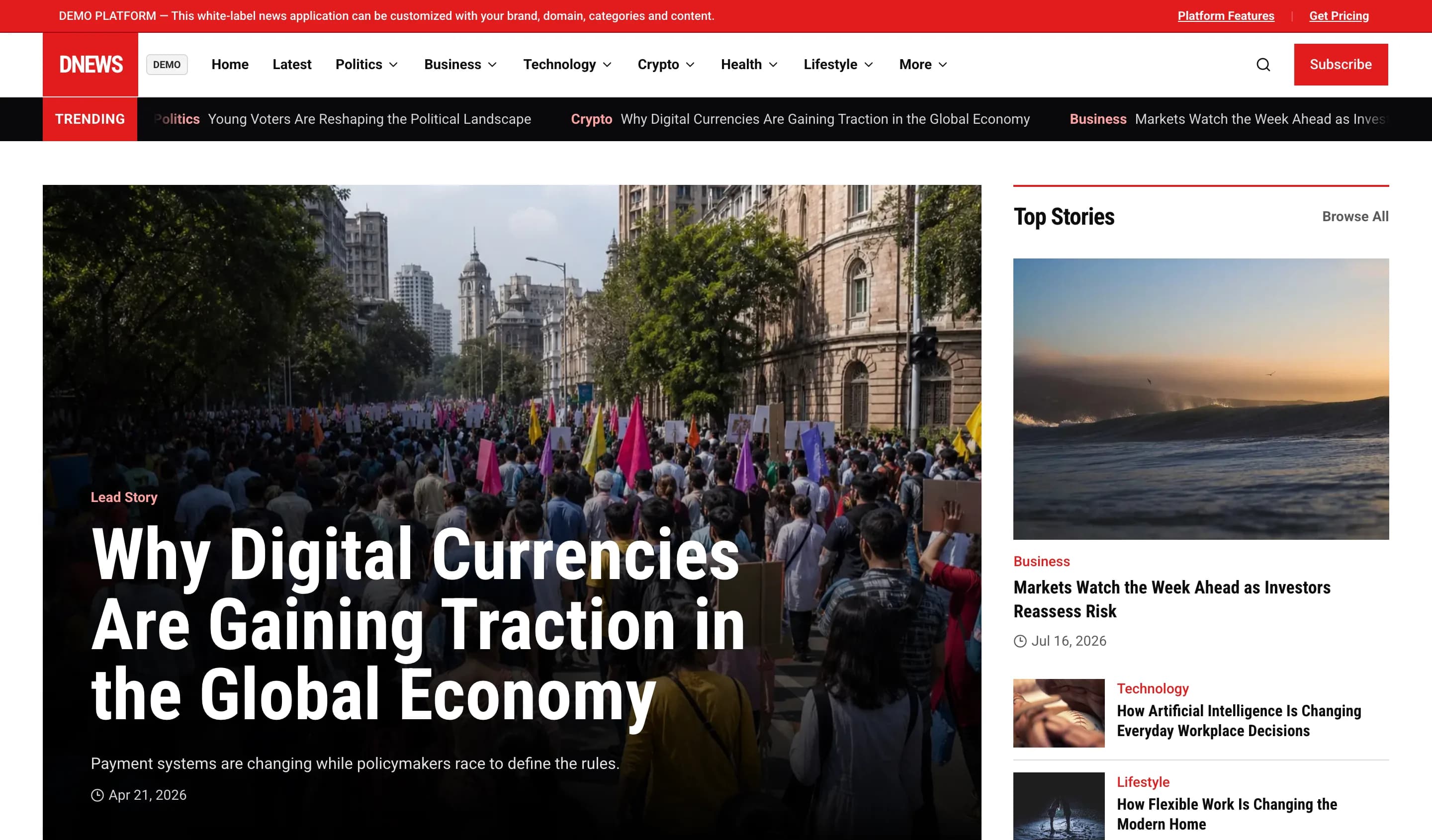
Short answer
News portal software needs four things a general CMS does not provide: a multi-role editorial workflow where reporters submit and editors approve, scheduled and embargoed publishing, article structured data and clean URLs for search and news aggregators, and a monetization layer for ads or subscriptions. Speed matters more than features, because news traffic arrives in spikes.
Publishers often start on a general-purpose CMS and hit the same wall: it can store articles, but it cannot run a newsroom. The gap is not the editor — it is everything around the editor. Here is what a news portal actually requires, grouped by the part of the operation it serves.
1. Editorial Workflow and Roles
A newsroom is not one person publishing. Copy moves through hands, and the software has to model that or the process moves to WhatsApp.
- Distinct roles: reporter, sub-editor, editor and administrator, with real permission boundaries.
- Draft, submitted, under review, approved and published as actual states, not a checkbox.
- Reporters can submit but not publish. This single rule is why generic CMS setups fail in newsrooms.
- Editorial notes and revision history, so a rejection explains itself and changes are traceable.
- Byline management, including guest contributors and wire copy attribution.
- Desk or category assignment, so an editor sees their own queue rather than everything.
2. Publishing Controls
- Scheduled publishing at an exact time, for embargoed and planned stories.
- Breaking-news placement that overrides normal ordering on the front page.
- Homepage and section curation an editor controls, rather than pure reverse-chronology.
- Update and correction handling that preserves the original publication date while recording the revision.
- Unpublish and takedown, including from caches — legally necessary sometimes, and often missing.
- Preview of the exact live rendering before publishing.
3. Content Structure and Media
- Categories and sub-categories, plus tags — publishers need both, and they are not the same thing.
- Rich media in the article body: image galleries, embedded video, and social embeds.
- Image handling with automatic resizing, credit and caption fields. Photo credit is a legal requirement, not a nicety.
- Related-article linking, manual and automatic, which is the main driver of pages per session.
- Multi-language support if you publish in more than one, with articles linked across languages.
- Full-text search across the archive, for both readers and the desk.
4. Search Visibility and Structured Data
News competes on discovery more than any other content category. These are requirements, not enhancements:
| Requirement | Why it matters |
|---|---|
| NewsArticle structured data | Eligibility for Google News and Top Stories placement |
| Clean, stable article URLs | URLs that change lose accumulated ranking and break inbound links |
| News sitemap | A separate sitemap for recent articles, which aggregators poll |
| Accurate publish and update timestamps | Recency ranking depends on them being correct, not approximate |
| Author pages | Named, credible authorship is a direct trust signal |
| Per-article meta and social tags | Controls how a story appears in search and when shared |
| Fast page loads | News traffic arrives in spikes and bounces instantly on a slow page |
| RSS feeds | Syndication, aggregator pickup and reader subscriptions |
5. Reader Engagement
- Web and mobile push notifications for breaking news — the highest-return channel a publisher has.
- Newsletter capture and sending, or integration with whatever you already use.
- Comments with moderation, if you want them. Unmoderated comments are a liability.
- Social sharing that produces a correct preview card per article.
- Reading history or personalised sections, if your volume justifies it.
6. ePaper and Print Editions
Publishers with a print edition need the digital replica handled properly rather than as a PDF dump:
- Page-by-page edition upload with a date-based archive.
- Clip and share of an individual article region from a page.
- Zoom and mobile-readable rendering, since most readers arrive on a phone.
- Access control if the ePaper is subscriber-only.
7. Monetization
- Ad slots defined by position and page type, sellable directly or filled programmatically.
- Direct campaign management: advertiser, schedule, and impression or click reporting.
- Subscription and paywall support — hard, metered or freemium — if that is your model.
- Sponsored-content labelling, which is a disclosure requirement, not a design choice.
- Payment gateway integration under your own merchant account.
8. Operations and Analytics
- Article performance by views, reading time and traffic source.
- Per-author and per-desk output, for editorial management.
- Traffic-spike handling — caching and CDN, because a story going viral is the point.
- Backups and an archive strategy; a news archive is the publication's asset.
- Uptime monitoring, since being down during a breaking story is the worst possible time.
Choosing an Approach
Publishing operations are standardised enough that building a portal from scratch is hard to justify — the editorial workflow, structured data, ePaper and ad layer are all solved problems. A ready-made news platform covers them and leaves your budget for reporting. Commission custom work for what actually differentiates your publication, not for the CMS underneath it.
Frequently Asked Questions
What does news portal software need that a normal CMS does not?
A multi-role editorial workflow where reporters submit and editors approve, scheduled and embargoed publishing, NewsArticle structured data with a news sitemap, and a monetization layer for ads or subscriptions. A general CMS stores articles; it does not run a newsroom.
How do I get a news site into Google News?
Publish original reporting with correct NewsArticle structured data, stable article URLs, accurate publication and update timestamps, named author pages, and a news sitemap — then apply through Publisher Center. Technical eligibility is necessary but not sufficient; the content standard still applies.
Do I need an ePaper module?
Only if you publish in print. If you do, it needs to be a real page-by-page edition with a date archive, article clipping and mobile-readable zoom — not uploaded PDFs, which readers abandon on a phone.
Should a news portal use ads or subscriptions?
It depends on audience size and niche. Broad general-interest traffic tends to monetize through advertising volume; specialised audiences with high intent support subscriptions at far lower traffic. Many publishers run both, with a metered paywall over an ad-supported base.
Why does page speed matter so much for news?
Because news traffic arrives in spikes from social and search, on mobile, from readers with no loyalty to your brand. A slow page loses them before the headline renders, and the spike is the entire opportunity for that story.
Can one platform run multiple publications?
Some can, and it is worth confirming if you operate more than one title or regional edition. You need separate branding, separate editorial teams and separate ad inventory per publication, with consolidated reporting for the group.
Explore Next
- See our Dino News portal and editorial CMS
- Learn about our web application development
Need Setup or Custom Coding?
Get in touch to rebrand or customize our ready-made products, or discuss custom development services. All quotes are customized and private.
Related Articles
Custom Software Development Cost in India: What Actually Drives the Price
Nobody can quote custom software from a one-line brief. Here are the factors that actually move the number, and how to compare two quotes that look nothing alike.
Visitor Management System Features for Gated Communities, IT Parks, and Corporate Offices
Discover how digital visitor management software replaces physical paper logs with QR gate passes, vehicle tracking, overstay alerts, and staff notifications.