
Why B2B Sales Teams Are Replacing Per-Seat SaaS with White-Label Sales CRM Software
Short answer
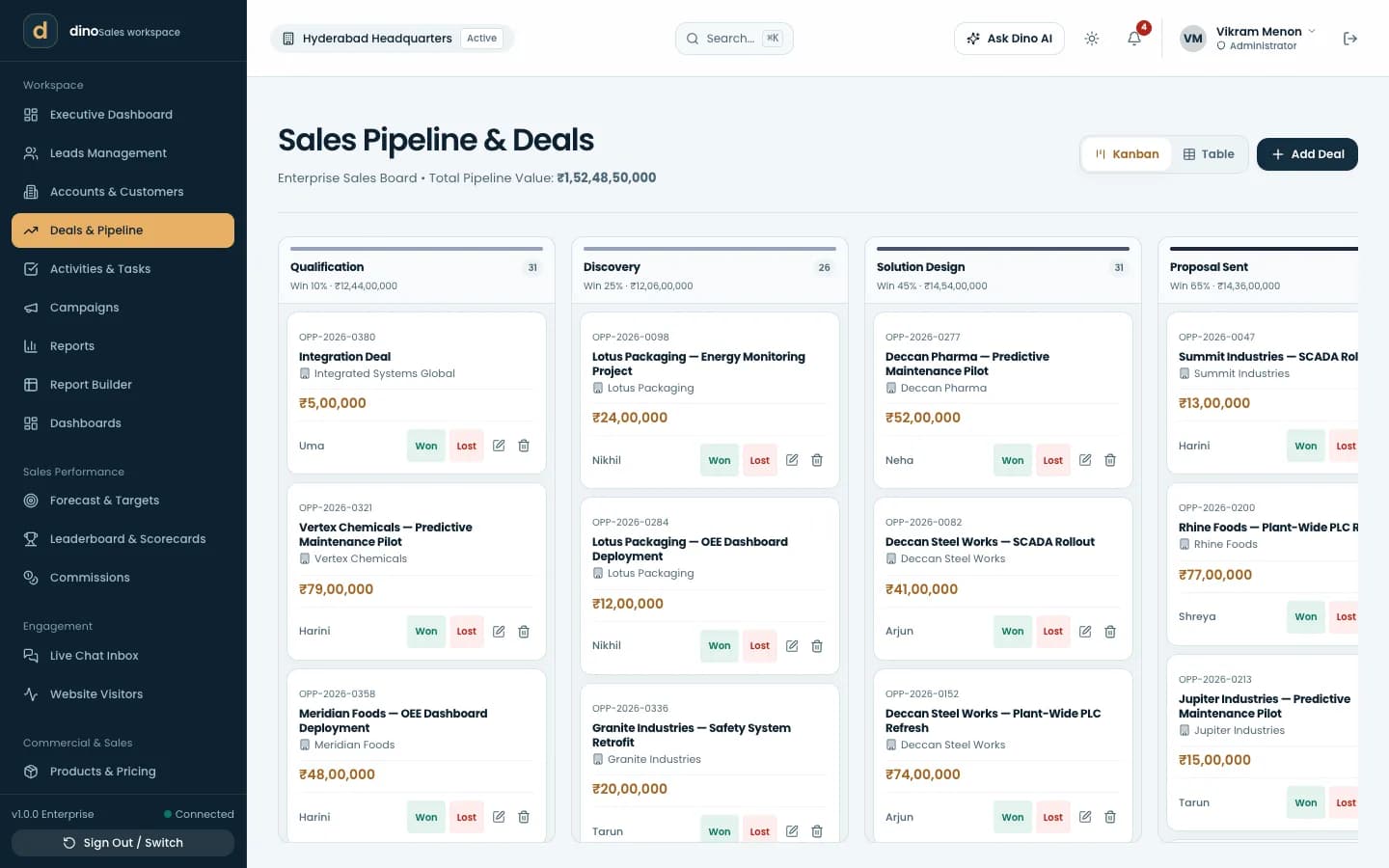
B2B companies replace per-seat SaaS CRMs with white-label software to eliminate compounding licensing fees and retain complete data residency. By licensing a ready-made platform with applicable source code and deploying it on private cloud servers, organizations gain configurable pipeline stages, quotation workflows and customer ownership without paying escalating monthly penalties as sales headcounts expand.
The True Cost of Per-Seat SaaS Escalation
Mainstream cloud CRMs often attract growing businesses with low initial introductory tiers. However, as teams hire additional sales representatives, business development reps, account managers, and support agents, per-seat licensing costs compound rapidly into tens of thousands of dollars annually.
Furthermore, vendors routinely gate critical capabilities—such as custom deal pipelines, automated email sequences, and webhook integrations—behind their most expensive enterprise tiers. This artificial feature tiering forces companies to upgrade their entire team to premium tiers merely to access basic operational tools.
Operational Advantages of White-Label CRM Licensing
A white-label sales CRM offers a transparent commercial alternative. Organizations license the completed application along with the source code for the agreed scope, allowing them to rebrand the interface with their corporate identity, logos, and custom domains.
Because the application runs on your private cloud server, you can create user accounts for your entire organization without incurring incremental monthly seat charges. Field sales reps, sales managers, finance auditors, and executive leaders can collaborate on the same platform without artificial licensing constraints.
Data Residency and Regulatory Compliance
For enterprises operating in regions with stringent data protection standards—such as GDPR in Europe or PDP in the Middle East and India—relying on third-party SaaS vendors introduces continuous regulatory audit overhead. Customer records, financial quotations, and transaction notes are stored on external vendor clouds with limited visibility.
With a self-hosted white-label CRM, your customer database remains housed inside your specified cloud region or on-premises data center. Database backups, encryption policies, and network firewall rules remain under the exclusive control of your internal IT administrators.
Technical Customization and Internal Workflow Alignment
Commercial B2B sales cycles rarely conform to generic out-of-the-box workflows. Organizations frequently need specific quotation calculation methods, regional tax formulations, and custom approval state machines that SaaS platforms cannot accommodate without complex third-party middleware.
Holding the underlying source code empowers engineering teams to extend the platform directly. Developers can connect internal ERP systems, build bespoke webhooks, or customize deal stage logic without vendor lock-in or fear of breaking changes from unannounced platform updates.
Frequently Asked Questions
Frequently Asked Questions
Does a white-label CRM require ongoing maintenance by our internal developers?
Basic hosting maintenance is minimal since the application runs as a standard Node.js and PostgreSQL service. Three months of technical support are included with initial delivery to assist with configuration and deployment.
Can we rebrand the entire application with our company logo and brand colors?
Yes. The white-label package allows complete interface re-skinning, domain mapping, custom email notification templates, and invoice header branding.
How long does standard deployment take for Dino Sales CRM?
Standard setup and configuration is estimated at approximately two weeks after scope, assets and access are confirmed.
Need Setup or Custom Coding?
Get in touch to rebrand or customize our ready-made products, or discuss custom development services. All quotes are customized and private.
Related Articles
AI-Powered Sales CRM: Architecture, Record Grounding, and Self-Hosted Deployment
Explore the technical architecture of an AI-powered sales CRM. Learn how record grounding, self-hosted data isolation, and API encryption protect business data while enhancing sales productivity.
B2B Sales Pipeline Stages: Managing Deals from Lead Capture to Invoicing and Renewal
Learn how to structure an end-to-end B2B sales pipeline that bridges lead scoring, opportunity management, multi-level quotation approvals, and automated invoice aging.