
Real Estate Booking Payment Plans, Milestone Collections, and Escrow Accounting
Short answer
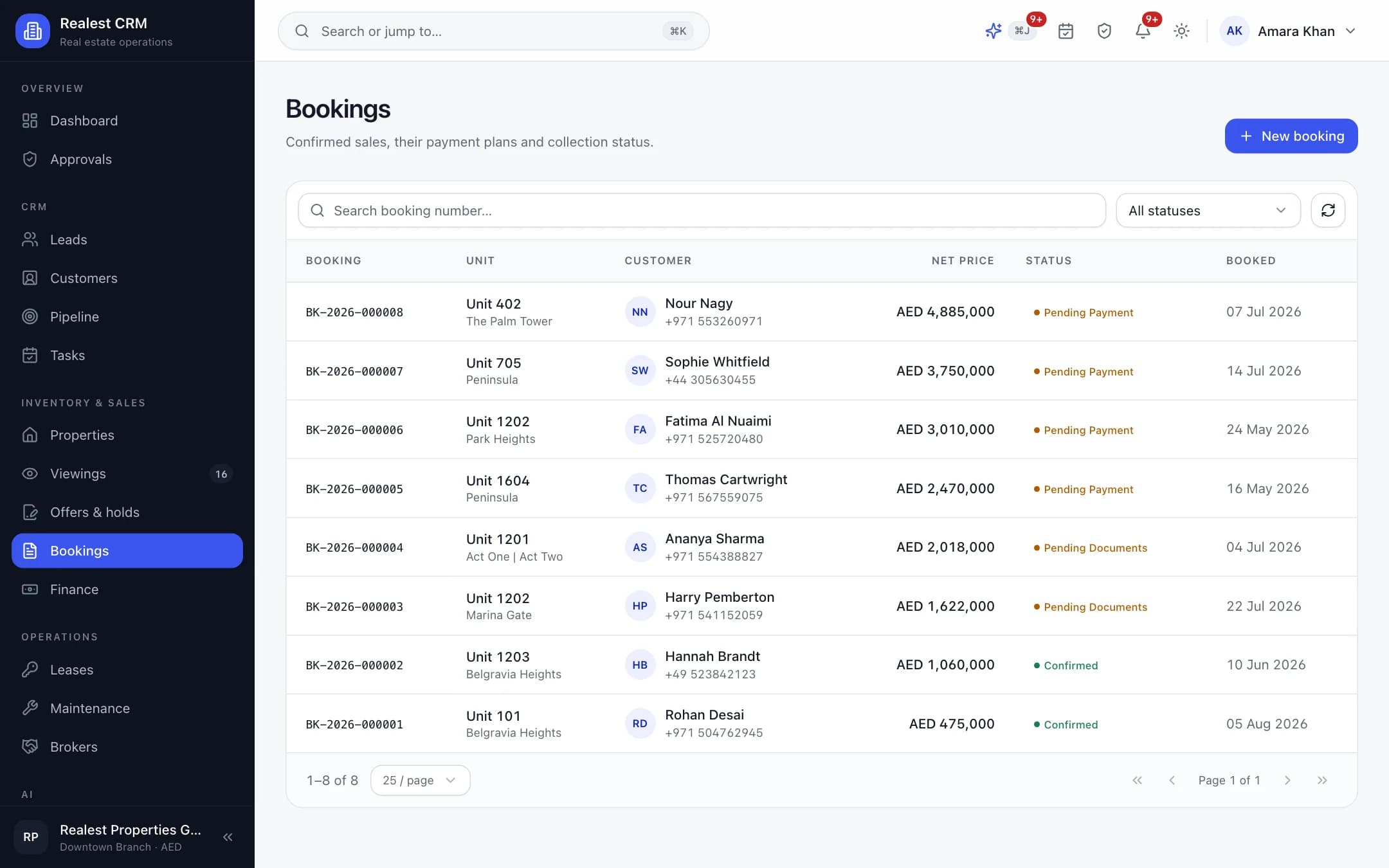
Real estate booking payment plans enforce structured installment schedules linked to construction milestones or calendar dates, backed by server-side inventory locking that prevents double-booking. When buyers remit installments, automated accounting engines match funds to designated project escrow accounts, allocate payments against overdue milestones, and generate official digital receipts with complete audit tracking.
The Financial Dynamics of Real Estate Property Sales
Selling residential towers, commercial plazas, and master-planned villa communities involves substantial multi-year capital commitments. Unlike standard retail or eCommerce transactions, off-plan property sales stretch across 24 to 60 months, with buyers paying in structured installments tied to calendar intervals or physical construction progress milestones (such as foundation pouring, structural slab completion, and facade installation).
When property developers and brokerages manage these multi-million-dollar receivable ledgers across spreadsheets or basic sales tools, discrepancies inevitably arise. Units get double-booked during promotional launches, milestone payment demand notices go unsent, and funds get misallocated across regulatory escrow accounts. A specialized property CRM and ERP system establishes server-level control over every unit booking, payment plan, and financial ledger.
Preventing Double-Booking with Concurrency-Safe Unit Holds
During real estate project launches, hundreds of sales agents and external channel brokers present the same inventory simultaneously. If two brokers submit offers for the same luxury penthouse within minutes, developers face commercial disputes and reputational damage.
Server-Enforced Unit State Machines
Realest CRM enforces a strict database state machine covering every property unit in the development:
| Unit State | Allowed Operations | System Guardrails |
|---|---|---|
| Available | Brokers can view details, schedule site visits, and create preliminary quotes | Visible on interactive stacking plans with active brochure generation |
| Temporary Hold | Reserved for an interested buyer submitting an expression of interest (EOI) | Automated 48-hour expiration timer; locks unit against competing holds |
| Under Booking | Buyer submits initial token deposit and signs official booking agreement | Management discount sign-offs required; payment plan initialized |
| Contracted (Sold) | Sale and Purchase Agreement (SPA) executed; unit permanently locked | Milestone schedule generated; unit removed from active sales inventory |
Structuring Construction-Linked Milestone Payment Plans
Developers offer versatile payment structures to attract institutional investors and individual homeowners. The real estate CRM must automatically generate and track these milestone schedules:
- Down Payment / Token Installment: Initial 10% to 20% due upon execution of the booking agreement.
- Construction Milestone Triggers: Incremental 10% installments triggered automatically when civil engineering inspectors certify completion stages (e.g., 20% upon completion of basement structure, 10% upon 15th-floor slab casting).
- Post-Handover Payment Plans (PHPP): Structured monthly or quarterly payments extending 2 to 3 years after the keys are handed over.
- Late Payment Penalty Engine: Grace period tracking with automated statutory interest calculation for overdue accounts.
Statutory Escrow Account Allocation and Receipt Issuance
In jurisdictions with stringent real estate regulations (such as RERA in Dubai or RERA in India), developer receivables for off-plan projects must deposit directly into project-specific statutory escrow accounts. Mingling operational cash flow with construction funds is legally prohibited.
Realest CRM automatically attributes incoming wire transfers and bank payment slips to the corresponding escrow ledger and allocates the funds against the buyer's earliest overdue milestone. The system generates official digital tax invoices, updates bank reconciliation ledgers, and transmits payment receipts to the buyer's portal immediately.
Frequently Asked Questions
Frequently Asked Questions
How does Realest CRM prevent double bookings during high-traffic project launches?
The platform uses pessimistic database locking and temporary holding timers, ensuring only one agent can reserve a specific unit at any given instant.
Can construction milestone invoices be triggered automatically upon engineer certification?
Yes. When an engineering inspector updates the project progress stage, the system automatically generates demand notices and emails payment links to all contracted buyers in that tower.
Does Realest CRM support multi-currency payments from international property investors?
Yes. The platform records payments in multiple foreign currencies, automatically calculating conversion values against the project's base reporting currency.
Can external broker agencies access the inventory through a channel partner portal?
Yes. Realest CRM includes a dedicated broker portal where registered channel partners can review real-time availability, register leads, and track commission claims.
Need Setup or Custom Coding?
Get in touch to rebrand or customize our ready-made products, or discuss custom development services. All quotes are customized and private.
Related Articles
Real Estate Portal Lead Deduplication, Ingestion, and Site Visit Scheduling
Learn how to build high-velocity webhook ingestion for real estate portals, eliminate lead duplication across brokers, and automate property site visit scheduling.
AI-Powered Real Estate CRM Software: Streamlining Listings, Portals, and Global Deals
Learn how luxury property developers and international brokerages across Dubai, London, New York, and Riyadh use AI-powered real estate CRM software to manage property portfolios.