
How to Launch a Scalable Multi-Vendor Marketplace with DinoCommerce
Short answer
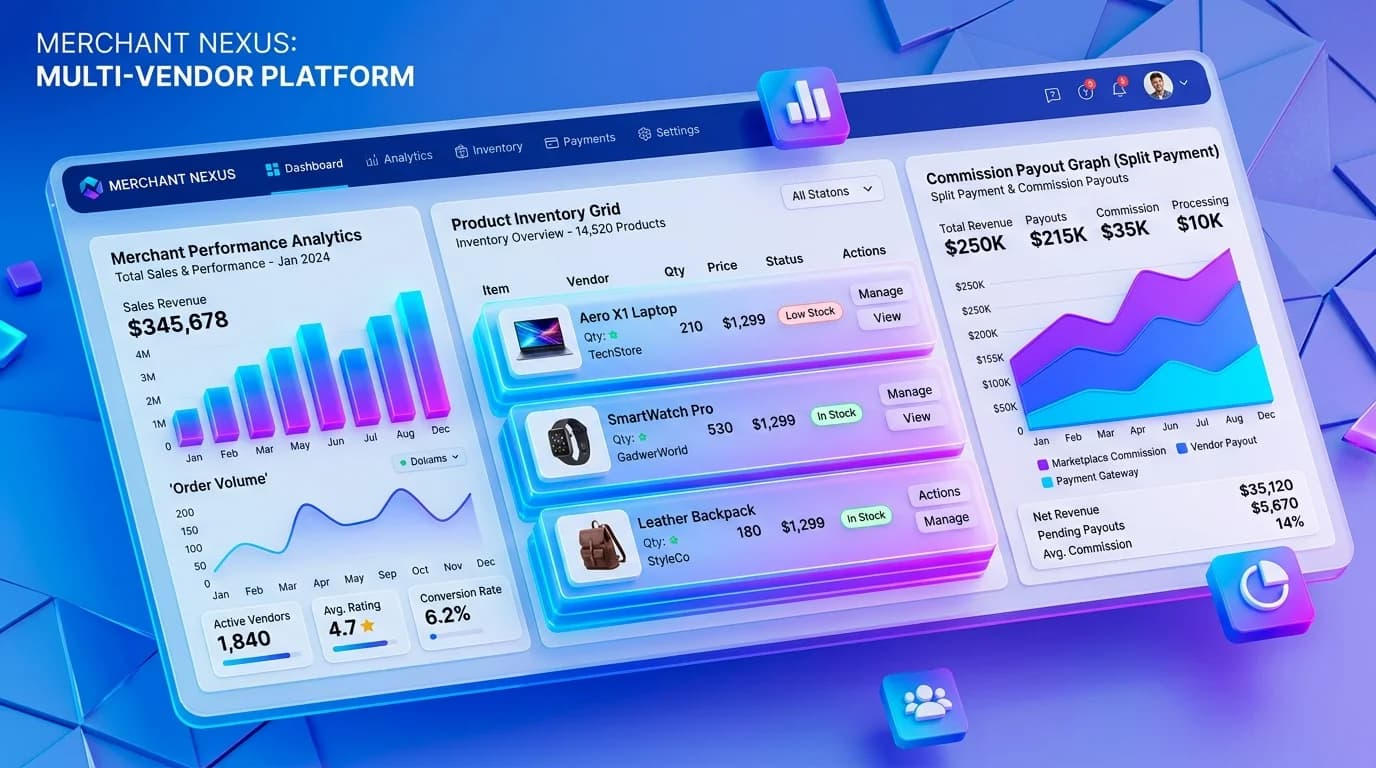
Launching a multi-vendor marketplace with DinoCommerce allows entrepreneurs to onboard independent merchants, manage unified product catalogs, and automate commission splits. Unlike single-store ecommerce carts, DinoCommerce delivers dedicated vendor administration portals, automated order routing by seller, direct payment gateway escrow integration, and centralized platform governance with self-hosted source-code licensing on private cloud servers.
Software discussed: DinoCommerce · Try the live demo
Building a multi-vendor marketplace platform like Amazon, Etsy, or regional trade portals requires an ecommerce architecture designed for multi-party coordination. Rather than managing single-warehouse stock, the platform must coordinate dozens or hundreds of independent sellers, each with distinct catalogs, shipping rules, and payout accounts across varied product categories.
Core Architectural Layers of DinoCommerce
An enterprise multi-seller marketplace separates administrative governance from individual merchant day-to-day fulfillment across distinct application layers:
A marketplace has two customers with opposing interests, and the architecture has to serve both. Buyers want one catalogue, one cart and one support contact; vendors want control over their pricing, stock and fulfilment. The layer that reconciles them is the order-splitting logic, which turns a single buyer checkout into per-vendor sub-orders that each settle, ship and refund independently.
- Master Platform Console: Operators set global commission rates, review vendor verification documents, approve product listings, and release merchant payouts.
- Merchant Workspace: Independent seller dashboards where vendors manage SKUs, track stock balances across fulfillment centers, and print order shipping labels.
- Unified Customer Shopping Cart: Shoppers browse items across multiple vendors in a single checkout experience with automated split shipping computations.
- Split Payment Settlement: Automated gateway splitting (via Stripe Connect, Razorpay Route, or PayPal Marketplace) allocating vendor earnings and platform fees.
- Order Tracking & Dispute Portal: Structured customer inquiry workflows allowing buyers and sellers to resolve return requests with platform mediator oversight.
DinoCommerce Self-Hosted vs Hosted Marketplace Builders
| Platform Attribute | DinoCommerce Marketplace | Hosted Marketplace Plugins (Shopify/Woo) |
|---|---|---|
| Monthly Platform Fee | $0 (Self-hosted on your cloud VPS) | $299 to $2,000+ per month in plugin licenses |
| Transaction Take Rate | Vendor fees depend on the licence; operating costs still apply | Compounding revenue percentages and app fees |
| Codebase Access | Direct source-code modification and expansion | Proprietary locked plugin ecosystem |
| Database Scaling | Direct PostgreSQL optimization and horizontal read replicas | Shared vendor database concurrency limits |
| Custom Payout Gateways | Integrate any regional payment processor | Restricted to supported platform gateways |
Commission structure is the strategic difference. A hosted builder takes a cut of every transaction on your marketplace forever, which means your platform's success permanently funds someone else's. Self-hosting converts that variable cost into a fixed one, and the crossover arrives quickly once monthly gross merchandise value passes a modest threshold.
Creating a sustainable digital marketplace requires architectural control. Explore the DinoCommerce Platform and our API & Payment Integration services for custom payout workflows.
Vendor Approval and Catalog Moderation Workflows
Maintaining marketplace quality requires structured seller onboarding. DinoCommerce incorporates automated seller KYC document verification queues and staging areas where newly uploaded product listings must pass administrative review before appearing in public search feeds. This safeguards buyers from counterfeit goods and policy violations.
Moderation load grows faster than vendor count, so decide early what is reviewed and what is spot-checked. Reviewing every listing is feasible at twenty vendors and impossible at two hundred. The workable pattern is full review during a new vendor's probation period, then automated checks on price, image and prohibited-category rules with manual review reserved for flagged items and reported listings.
Frequently Asked Questions
Launching Your Digital Marketplace
Building a marketplace foundation from scratch takes months of complex payment integration. Start with DinoCommerce to launch a branded multi-vendor marketplace on private cloud infrastructure.
Frequently Asked Questions
How are shipping fees calculated when a customer orders from multiple sellers?
The checkout engine can calculate combined flat-rate shipping or aggregate individual shipping rates per vendor based on geographic proximity.
Can the platform operator set different commission rates for different product categories?
Yes. The admin console supports flexible commission rules, including category-based percentages, flat transaction fees, or subscription store memberships.
Does DinoCommerce support mobile shopping apps for buyers?
Yes. Cross-platform mobile shopping applications built with modern Flutter frameworks are available under the platform grant.
Where are transaction and customer records stored?
All data resides on your private cloud database instance, providing complete compliance governance and financial data security.
The software in this article
DinoCommerce
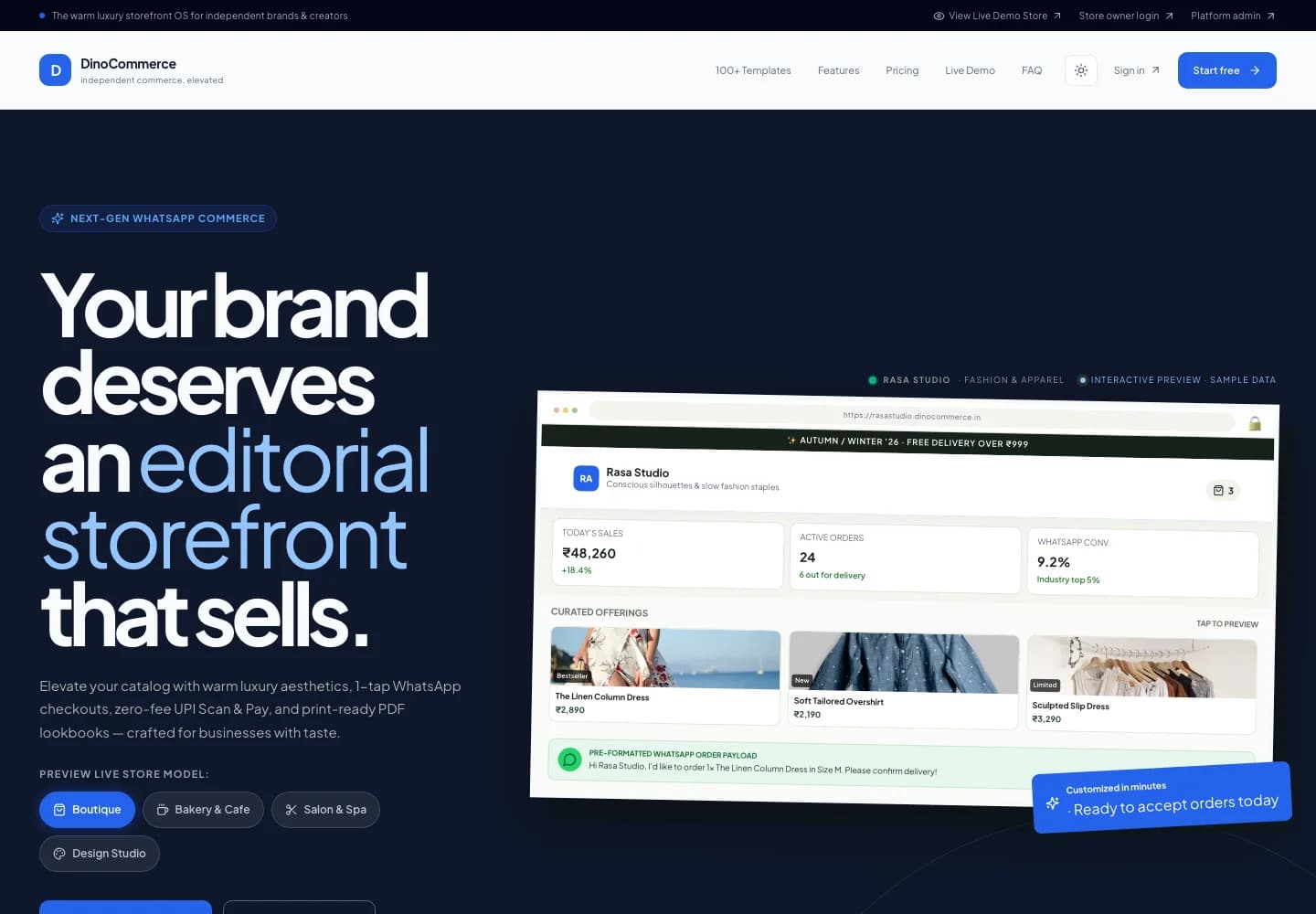
Launch a fast, multi-tenant e-commerce storefront SaaS platform featuring 100+ industry templates, 6 interchangeable style engines, 1-tap WhatsApp checkout, zero-fee UPI QR payments, custom domain DNS automation, and printable PDF lookbooks.
Explore Next
- Learn about our API & payment gateway integration
Want DinoCommerce Under Your Brand?
Rebrand DinoCommerce with your logo and domain, or have it customized for your workflow. All quotes are customized and private.
Related Articles
Hyperlocal Quick-Commerce Grocery Delivery: Dark Store Architecture and Route Dispatch
A technical architecture guide to building a sub-30 minute quick-commerce grocery delivery platform with dark store bin picking and automated rider dispatch.
How to Build a Daily Subscription Milk & Morning Grocery Delivery App
A complete guide to launching an on-demand daily milk delivery and morning grocery platform with recurring calendars, route planning, and prepaid wallets.