
Hyperlocal Quick-Commerce Grocery Delivery: Dark Store Architecture and Route Dispatch
Short answer
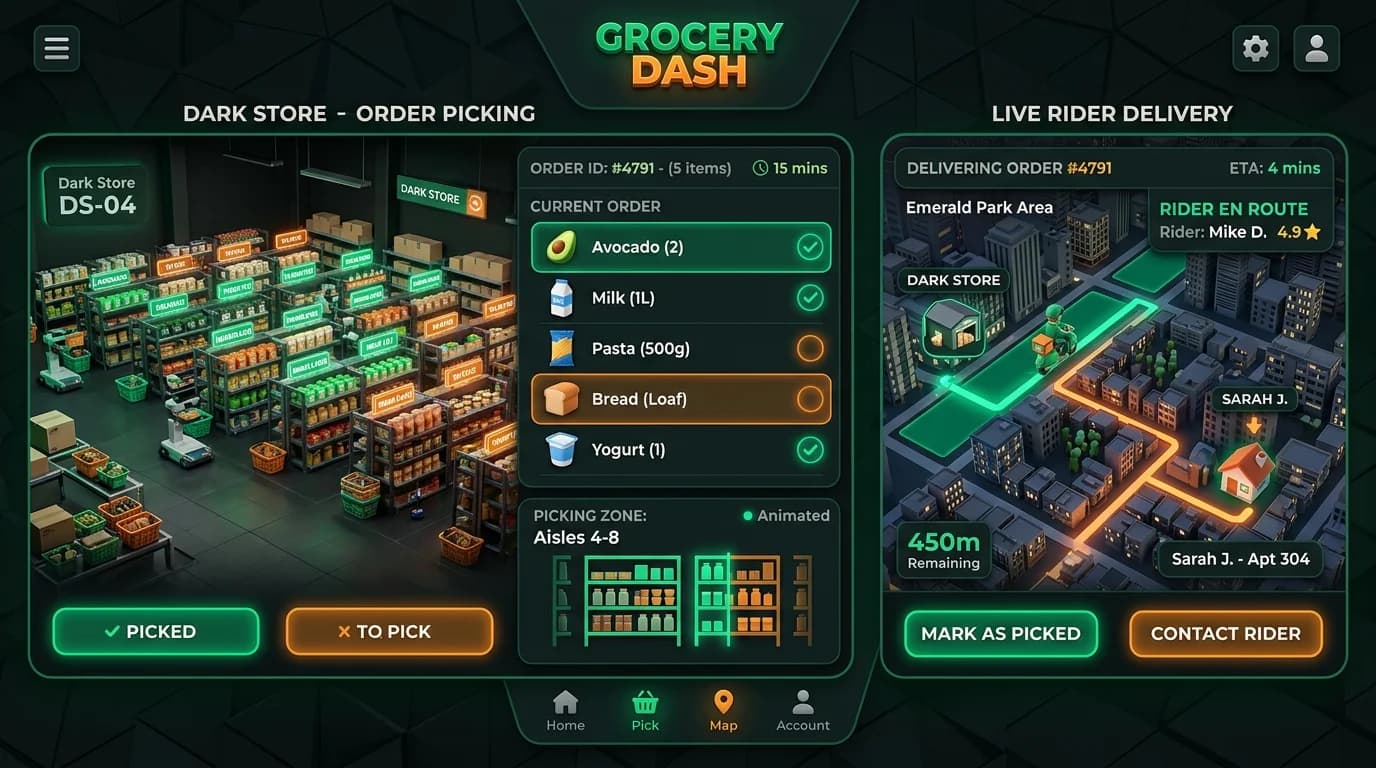
Hyperlocal quick-commerce grocery delivery architecture coordinates rapid dark store order picking with automated rider dispatch to fulfill orders within 15 to 30 minutes. It requires sub-second inventory synchronization across regional micro-warehouses, optimized in-aisle picker routing, automated courier batching, and live GPS map tracking built on low-latency cloud infrastructure with client-controlled database hosting.
Software discussed: FreshCart · Try the live demo
Consumer expectations for grocery and FMCG fulfillment have evolved from next-day delivery to sub-30-minute quick-commerce. Fulfilling orders in minutes requires specialized software coordinating dark store warehouse bins with couriers on the road. Without integrated picking and dispatch technology, micro-warehouses quickly face order bottlenecks during peak dinner and weekend hours.
Core Architectural Building Blocks of Quick Commerce
A high-velocity quick-commerce software stack orchestrates three distinct operational surfaces simultaneously across web and mobile platforms:
Serviceability is the first gate and deserves to be modelled precisely. A pin code is a blunt instrument in Indian cities, where a single code can span both a dense colony minutes from the dark store and an area forty minutes away. Polygon-based zones per store, with a promised window attached to each zone, keep delivery promises achievable instead of optimistic.
- High-Performance Customer Mobile App: Sub-second catalog browsing, dynamic category carousels, instant product search, and single-tap checkout.
- Dark Store Picker Terminal: Tablet application that groups incoming orders by warehouse aisle, shelf height, and bin location to guide pickers along minimal walking paths.
- Automated Rider Dispatch Engine: Proximity algorithms that ping available delivery couriers based on real-time distance from the micro-warehouse.
- Sub-Second Inventory Synchronization: Live stock deduction upon cart reservation, preventing out-of-stock orders during sudden surge periods.
- Dynamic Substitution Engine: Suggests immediate stock alternatives to buyers if a selected fresh produce item fails quality inspection during packing.
Quick Commerce Micro-Warehousing vs Standard Multi-Day Ecommerce
| System Dimension | FreshCart Quick-Commerce | Standard Centralized Ecommerce |
|---|---|---|
| Fulfillment Window | 15 to 30 minutes from micro-hubs | 24 to 72 hours from regional fulfillment centers |
| Warehouse Layout | Dense urban dark store with numbered bin locations | Sprawling suburban logistics warehouses |
| Stock Level Precision | Zero buffer tolerance with instant cart reservations | Batched inventory sync every few hours |
| Rider Allocation | Automated algorithmic dispatch to nearby riders | Courier API dispatch with end-of-day package manifests |
| Cold Chain Monitoring | Short-hop thermal insulated bags | Refrigerated cross-country freight logistics |
The economics differ as sharply as the architecture. Standard ecommerce spreads fulfilment cost over a large basket shipped once; quick commerce delivers a small basket within minutes, so the cost per order is dominated by the rider and only works above a certain order density per square kilometre. Choosing catchment areas is therefore a financial decision before it is a logistics one.
Building a resilient quick-commerce business requires specialized micro-fulfillment technology. Explore our FreshCart Grocery Platform and review our Custom Software Development Services to tailor route dispatch algorithms.
Picker Route Optimization Inside the Dark Store
In a 15-minute delivery promise, picking and packing must complete in under 3 minutes. The dark store terminal organizes pick lists by optimal traversal sequence (heavier dry goods first, delicate produce and dairy last), minimizing warehouse picker travel time and avoiding congestion in narrow fulfillment aisles.
Pick-path efficiency depends on shelf layout as much as on software. Storing fast-moving items near the packing station and grouping what customers commonly buy together shortens the walk before any algorithm runs. The system's contribution is ordering the pick list by aisle sequence rather than by the order the customer added items, which alone removes most of the backtracking.
Frequently Asked Questions
Launching Your Quick-Commerce Operation
Meet the growing consumer demand for rapid doorstep delivery. Review the FreshCart Grocery Delivery Platform to explore complete mobile and administration capabilities.
Frequently Asked Questions
How does the system prevent overselling when stock runs low?
The platform utilizes atomic database reservations that temporarily lock inventory units the moment a customer proceeds to checkout, releasing items if abandoned.
Can multiple dark stores or franchise hubs be managed under one central dashboard?
Yes. Platform administrators monitor inventory levels, picker throughput times, and rider delivery metrics across all urban micro-warehouses.
Does FreshCart support live GPS courier tracking on customer phones?
Yes. Customers view real-time courier movement on an interactive map with accurate estimated arrival times updated via WebSockets.
Can fresh perishables with variable weights (fruits/vegetables) be accommodated?
Yes. The inventory model supports sold-by-weight items with barcode scale integration during dark store packing.
The software in this article
FreshCart
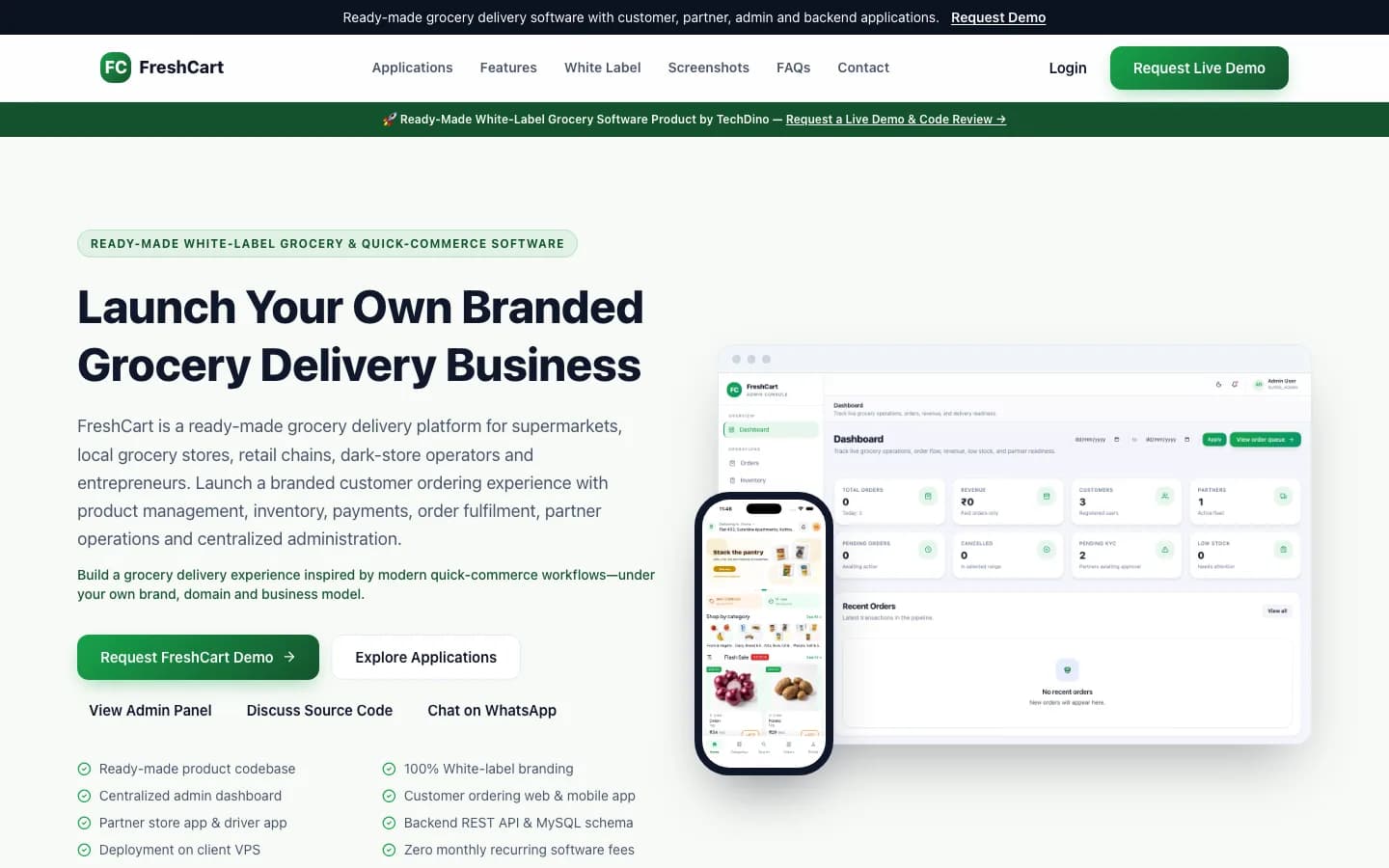
Launch your own branded grocery delivery or quick-commerce business with customer ordering applications, an admin dashboard, store and fulfilment workflows, delivery management, inventory controls, payments, offers and reporting.
Explore Next
- Learn about our custom software development
Want FreshCart Under Your Brand?
Rebrand FreshCart with your logo and domain, or have it customized for your workflow. All quotes are customized and private.
Related Articles
How to Launch a Scalable Multi-Vendor Marketplace with DinoCommerce
A step-by-step architectural guide to launching a multi-seller ecommerce marketplace with vendor portals, automated split payments, and shared catalogs.
How to Build a Daily Subscription Milk & Morning Grocery Delivery App
A complete guide to launching an on-demand daily milk delivery and morning grocery platform with recurring calendars, route planning, and prepaid wallets.