
Multi-Tenant Auto Repair & Garage Management SaaS: Architecture and Feature Checklist
Short answer
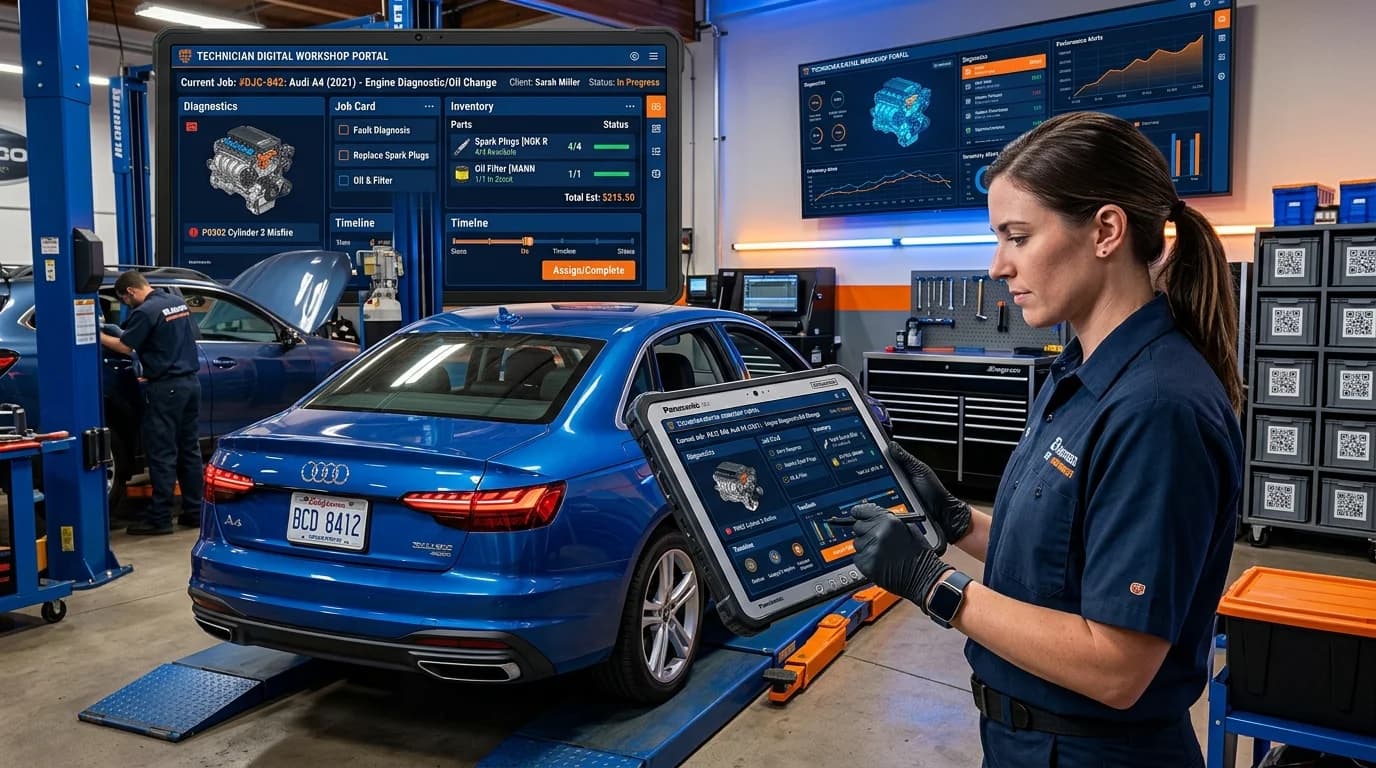
Multi-tenant auto repair SaaS enables software providers to host hundreds of independent automotive workshops on a unified cloud cluster while maintaining strict data isolation. Each garage tenant manages vehicle service intake, digital inspection checklists, technician job card allocation, spare parts stock ledgers, and automated customer WhatsApp updates under private tenant subdomains and custom branding.
Software discussed: Dino Auto Repair SaaS · Try the live demo
The automotive aftermarket is undergoing rapid digital modernization. Independent mechanical workshops, tire centers, and collision repair facilities are moving away from manual paper estimate slips toward cloud workshop management systems that streamline job cards and parts replenishment. Operating these workshops requires handling multi-stage repair workflows and supplier pricing databases efficiently.
Core Tenant Workflows in Automotive SaaS
A robust multi-workshop software system must support distinct operational roles across workshop owners, front-desk service advisors, and floor technicians:
Workshops vary more than their software usually allows. A two-bay roadside garage, a multi-brand service centre and a franchise network share job cards and invoices but differ in approval steps, technician roles and parts sourcing. A platform serving all three needs configurable workflow states per tenant, because hard-coding one shop's process is what forces the other two to work around the product.
- Digital Vehicle Intake & Job Cards: Service advisors record vehicle VIN numbers, fuel levels, existing scratch diagrams, and requested service packages on mobile tablets.
- Floor Technician Bay Assignment: Workshop managers allocate job tasks to specific service bays, tracking labor hours and technician efficiency ratios.
- Spare Parts Inventory & Margin Tracking: Real-time parts deduction upon job card authorization with minimum reorder alerts and purchase order generation.
- Automated Customer WhatsApp Invoicing: Customers receive digital inspection photos, estimate approval buttons, and payment receipts directly via messaging.
- Service History & Reminder Triggers: Automated notification schedules reminding vehicle owners of upcoming oil changes and preventative checkups.
Single-Garage Tool vs Multi-Tenant Repair SaaS
| Architecture Feature | Dino Auto Repair SaaS | Legacy Desktop Garage Software |
|---|---|---|
| Tenancy Model | Row-level multi-tenant Postgres isolation | Single machine on-premise installation |
| Platform Monetization | Monthly & annual tier billing for SaaS owners | Single one-off desktop license |
| Customer Transparency | Online estimate approvals & digital inspections | Paper-based manual quotations |
| Hardware Requirements | Any web browser, tablet, or smartphone | Dedicated local Windows workstation |
| Cloud Backup & Mobility | Continuous off-site database backups | Manual periodic local hard drive copies |
The two products serve different buyers entirely. A garage owner buys software to run their shop and judges it on job cards and billing; a SaaS operator buys a platform to sell subscriptions and judges it on tenant onboarding, plan gating and churn reporting. Building for one and marketing to the other is the most common way these projects disappoint both.
For entrepreneurs launching an automotive software business, Dino Auto Repair SaaS provides a production-tested foundation. Explore our SaaS Development Services to customize specific mechanic workflows or fleet inspection modules.
Database Isolation and Tenant Security
In a multi-tenant automotive SaaS environment, safeguarding workshop client databases, vendor pricing agreements, and labor margins is critical. The platform architecture enforces strict tenant boundary middleware on every SQL query, preventing cross-tenant data visibility while simplifying database migration and infrastructure updates across your cluster.
Whichever isolation model you pick, enforce the tenant boundary in one place. Filtering by tenant id in every query works until one developer forgets it in one endpoint, which is how cross-tenant leaks actually happen. Applying the scope in a shared data-access layer, and testing it with a deliberate attempt to read another tenant's record, is the check worth having in the suite.
Frequently Asked Questions
Launching an Automotive SaaS Platform
Establishing a vertical SaaS business in the automotive sector offers substantial recurring revenue. Discover the technical specifications of Dino Auto Repair SaaS to launch your workshop software subscription service.
Frequently Asked Questions
Can garage owners connect their own SMS or WhatsApp gateway credentials?
Yes. Each subscribed tenant can link their personal messaging API credentials to send branded service updates directly from their workshop phone number.
How does the platform handle vehicle inspection photos and damage logs?
Technicians can capture vehicle photos directly using tablet cameras during vehicle intake, attaching annotated scratch marks to the digital job card.
Can the SaaS owner configure tier limits on staff accounts and active bays?
Yes. The platform admin console allows the software owner to create subscription plans with variable limits on technician logins, monthly job cards, and storage.
Is source code provided under the commercial license?
Yes. TechDino provides the complete applicable source code for the platform admin portal, workshop tenant console, and REST API backend.
The software in this article
Dino Auto Repair SaaS
Launch a branded auto repair or garage-management SaaS using a ready-made multi-tenant platform. Customize the branding, deploy it on your own infrastructure, configure subscription plans and operate your own automotive software business.
Explore Next
- Learn about our SaaS development
Want Dino Auto Repair SaaS Under Your Brand?
Rebrand Dino Auto Repair SaaS with your logo and domain, or have it customized for your workflow. All quotes are customized and private.
Related Articles
Multi-Tenant SaaS Billing Architectures: Flat Self-Hosted vs Usage Metering
An engineering evaluation of multi-tenant SaaS monetization models: subscription tiers, seat licensing, usage-based metering, and self-hosted white-label alternatives.
RetailDino Review: Cloud POS, Inventory & Multi-Tenant Retail SaaS Platform
An in-depth technical review of RetailDino SaaS, evaluating its sub-100ms cloud POS billing engine, Flutter mobile barcode scanner, multi-tenant database isolation, inventory stock ledgers, and SaaS commercial viability.