
Restaurant Online Ordering System in Indonesia: QRIS Payments, Direct Orders and Table Booking
Short answer
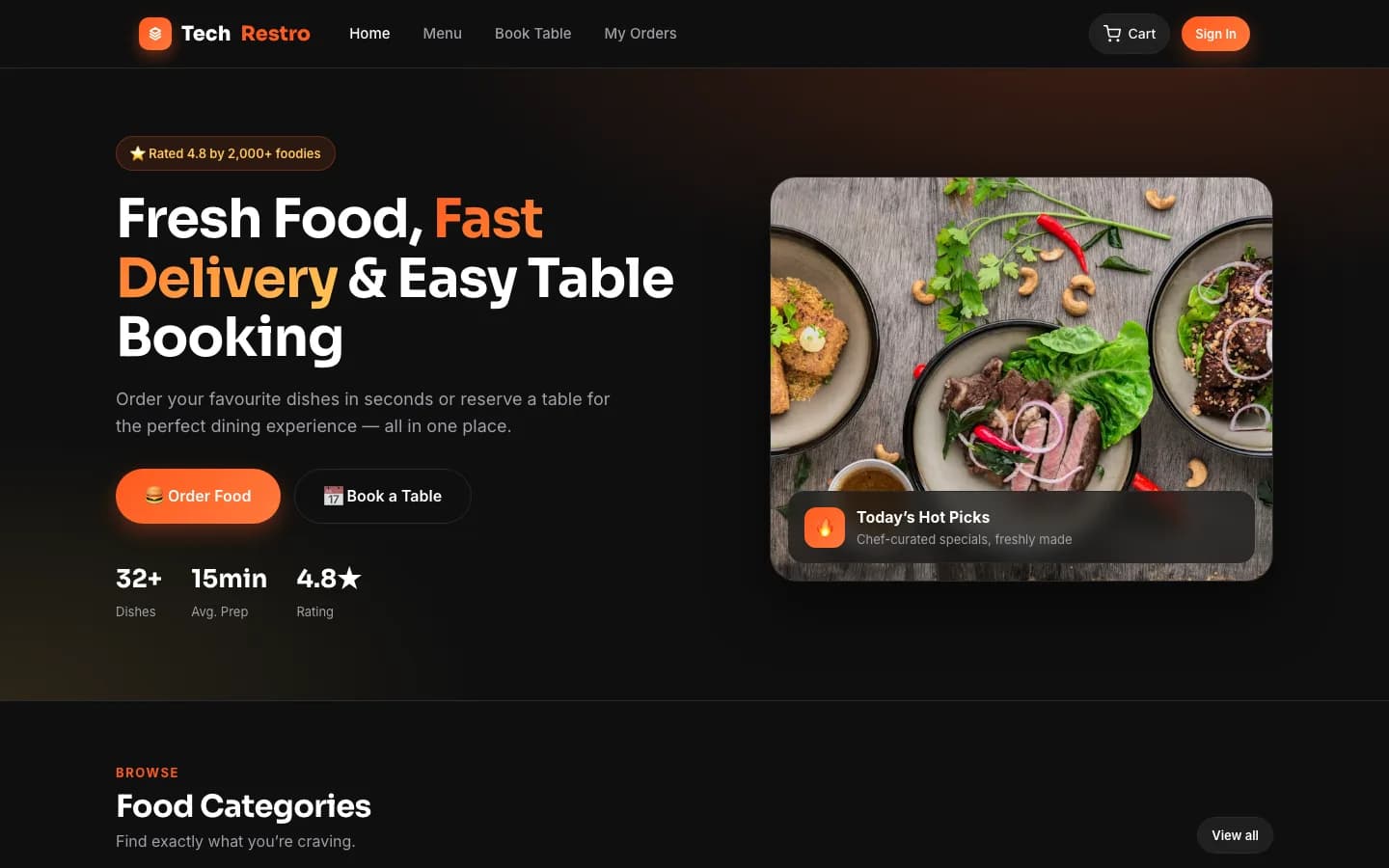
An Indonesian restaurant can take orders on its own branded website and app instead of relying only on delivery aggregators. TechRestro provides the digital menu, online ordering, table booking, live order status and an admin order desk, and a QRIS-capable gateway such as Midtrans or Xendit is connected during setup so diners pay from any bank app or e-wallet.
Software discussed: TechRestro · Try the live demo
Most restaurants and cloud kitchens in Jakarta, Surabaya and Bandung get a large share of their delivery orders through GoFood, GrabFood and ShopeeFood. Those platforms bring discovery, but every order carries a commission, the customer relationship stays with the platform, and promotions are run on the platform's terms. A direct ordering channel, which owners often search for as aplikasi pemesanan restoran, gives the restaurant an order path it controls for repeat customers and dine-in guests.
Why a Direct Ordering Channel Matters
- Margin: orders placed on your own channel do not pay an aggregator commission, so a regular customer who reorders every week is worth more there.
- Customer data: names, phone numbers and order history sit in your database, so you can run loyalty offers and reorder reminders with the customer's consent.
- Menu control: prices, combos and availability change in one admin panel instead of separate merchant dashboards.
- Dine-in: the same system takes table reservations and lets seated guests order from a QR code on the table.
- It complements aggregators rather than replacing them. Most restaurants keep their listings for new-customer discovery and move repeat business to the direct channel.
QRIS: One QR Code for Every Bank App and E-Wallet
QRIS (Quick Response Code Indonesian Standard) is Bank Indonesia's national QR payment standard. A single QRIS code can be paid from participating bank apps and e-wallets such as GoPay, OVO, DANA and ShopeePay, so a restaurant does not need a separate integration for each wallet.
In an ordering system, QRIS shows up in two places. At online checkout, the payment gateway generates a dynamic QRIS code for the exact order amount and confirms payment back to the order desk through a webhook, so the kitchen only sees paid orders. At the table, keep two codes separate: a menu QR that opens the ordering page, and the QRIS payment code shown when the bill is settled. Mixing them confuses guests and staff.
What TechRestro Covers
| Need | What TechRestro provides | Indonesia setup note |
|---|---|---|
| Digital menu and online ordering | Food catalog with variants, veg/non-veg tags, ratings and search | Prices in IDR; menu text in Bahasa Indonesia entered by the restaurant |
| Table booking | Reservation slots and a live table grid showing reserved, occupied and vacant tables | Useful for weekend dinner peaks and group bookings |
| Delivery and pickup | Order desk with Received, Preparing, Dispatch and Ready statuses | Own riders, or a courier integration scoped separately |
| Payments | Payment gateway integration plus cash at counter | QRIS, virtual accounts and e-wallets through Midtrans or Xendit |
| Customer notifications | WhatsApp API and SMS gateway integrations | WhatsApp is a common customer channel in Indonesia |
| Reporting | Daily revenue, item-wise sales and peak dining hours | Compare direct-channel sales against aggregator payouts |
| Branches | Standard menus and pricing across branches from one admin panel | Branch-level pricing and tax settings per city |
Running Direct Orders Alongside GoFood, GrabFood and ShopeeFood
The practical goal is not to leave the aggregators. It is to move customers who already know you onto a channel where the order costs less to fulfil. These are the levers restaurants use:
- A packaging insert or sticker with a QR code to your own ordering page, ideally with a small direct-order incentive.
- Table QR codes for dine-in ordering, so every seated guest sees your channel at least once.
- WhatsApp messages to past customers who opted in, announcing new menu items or weekly specials.
- Pickup discounts, which suit office areas such as SCBD and Kuningan where customers collect on the way back from lunch.
- Clear delivery zones and fees on your own channel, so customers know when ordering direct is the better deal.
Customer Data, Hosting and the PDP Law
An ordering system stores names, phone numbers and delivery addresses, which is personal data under Indonesia's Personal Data Protection Law (Law No. 27 of 2022). TechRestro is deployed on hosting the restaurant controls, so the database belongs to the business rather than sitting in a shared vendor platform. Hosting can target AWS Jakarta, Singapore or a client-owned VPS. Choosing a nearby region does not by itself establish compliance, so confirm consent wording, retention and access rules with an Indonesian adviser.
What Setup Involves
- Branding: restaurant name, logo, colours and your own domain across the ordering site and admin panel.
- Menu import: categories, items, variants, add-ons, prices in IDR and photos.
- Payments: the restaurant opens a merchant account with Midtrans or Xendit, completes the provider's verification, and the gateway is connected and tested with sandbox and live transactions.
- Messaging: a WhatsApp Business API number and SMS sender for order confirmations.
- Hosting: server, SSL, backups and the admin accounts for each branch.
- Staff walkthrough: order desk, table grid, menu edits and daily reports.
For deployment details specific to the country, see TechRestro for Indonesia and the Indonesia market page. For the kitchen side, the guide to cloud restaurant POS, KDS and QR ordering covers how tickets move from order to plate.
Frequently Asked Questions
Can TechRestro accept QRIS payments in Indonesia?
TechRestro's checkout connects to a payment gateway. For Indonesia, a QRIS-capable provider such as Midtrans or Xendit is integrated as part of the project scope, using a merchant account the restaurant opens with that provider.
Do I have to leave GoFood, GrabFood or ShopeeFood?
No. Most restaurants keep aggregator listings for discovery and use a direct channel for repeat customers, dine-in QR ordering and pickup orders, where each order costs less to fulfil.
Can the menu be in Bahasa Indonesia?
Yes. Menu items, categories and descriptions are entered by the restaurant in any language. Translating the interface itself into Bahasa Indonesia is confirmed in the project scope.
Does TechRestro support multiple branches?
Yes. Menus, pricing and order desks can be standardised across branches from one admin panel, with branch-level pricing and tax settings.
Who owns the customer data?
The restaurant. TechRestro is deployed on hosting the business controls, so customer records stay in its own database. Consent and retention rules under Indonesia's PDP Law should be confirmed with a local adviser.
The software in this article
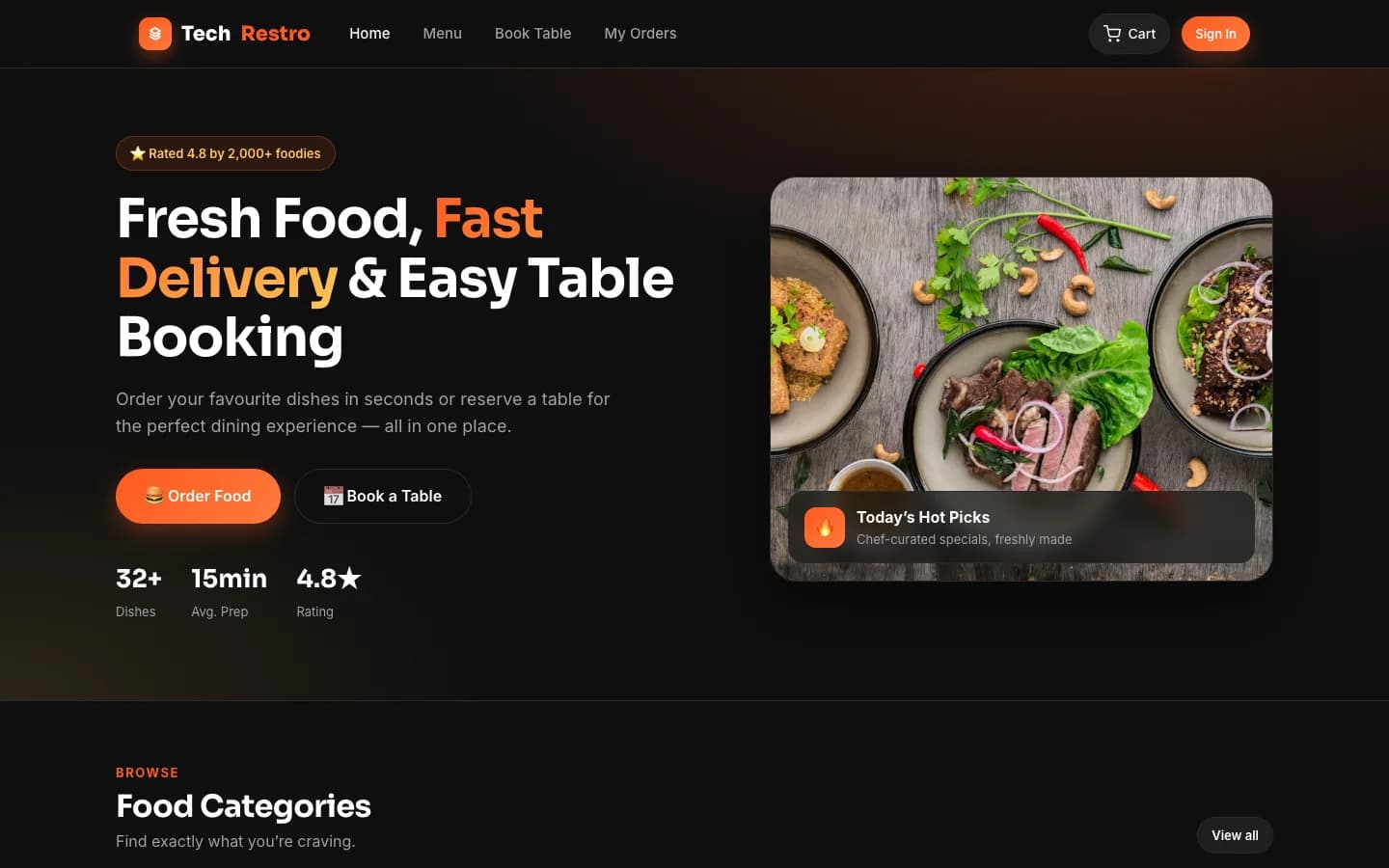
TechRestro
Restaurant online ordering and table booking platform with digital menu, delivery and pickup orders, reservation slots, and admin console with analytics.
Want TechRestro Under Your Brand?
Rebrand TechRestro with your logo and domain, or have it customized for your workflow. All quotes are customized and private.
Related Articles
Clinic Management System in Malaysia: Appointments, Patient Records and PDPA
What a Malaysian GP, dental or physiotherapy clinic needs from clinic software, how Clinic CRM maps to it, and how FPX payments, panel billing and PDPA obligations fit in.
Tuition Centre Management System in Malaysia: Fees, Attendance and Parent Updates
How a Malaysian tuition centre or enrichment school runs registration, class schedules, monthly fees with FPX or DuitNow, attendance and parent updates from one system.