
What Is White-Label Software? Definition, Examples, and How It Works
Short answer
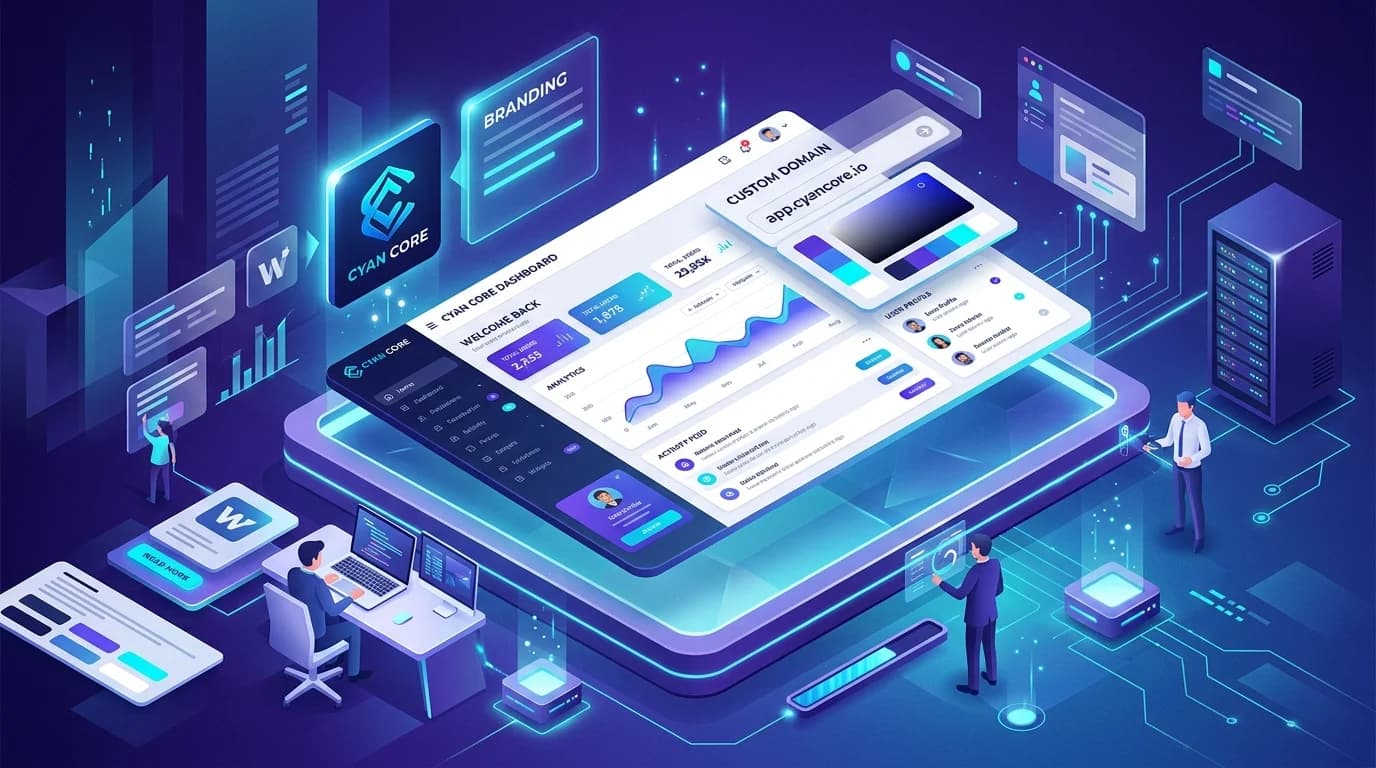
White-label software is a finished application built by one company and licensed to another, which rebrands it as its own product. The buyer replaces the logo, colours, domain and app name, then deploys it for their business or their clients. Development time and cost drop because the product already exists and only the branding, configuration and integrations change.
What Does White-Label Software Mean?
The term comes from manufacturing: a producer ships a product with a blank white label, and the reseller prints their own label on it. Software works the same way. A development team builds a complete application — customer app, admin panel, database, APIs — then licenses it to other businesses who present it under their own name. Your customers see your brand. They never see the original developer.
The key distinction is ownership of the customer relationship. With white-label software, you own the brand, the pricing, the support relationship and usually the hosting. You are not reselling someone else's product under their name — you are selling your product, which happens to be built on a licensed codebase.
How Does White-Label Software Actually Work?
The process is consistent across most vendors, whatever the product category:
- Evaluate a live demo — you test the real customer flow and the real admin panel, not screenshots.
- Agree the license scope — single business, client deployments, or reseller rights. This defines what you are legally allowed to do with the product.
- Branding is applied — your logo, colour scheme, app name, domain, email templates and invoice headers replace the vendor's.
- Configuration and integrations — payment gateway, messaging channel, tax rules and any market-specific settings are wired to your accounts.
- Deployment — the application is installed, usually on a server or cloud account you own, so the data stays under your control.
- Handover — you receive admin credentials, setup documentation and, depending on the license, the source code.
TechDino's version of this sequence is documented in the implementation process and white-label customization guides.
White-Label vs SaaS vs Custom Development
These three models get confused constantly, because all of them end with working software. What differs is who owns what, and what happens in year three.
| White-label license | SaaS subscription | Custom development | |
|---|---|---|---|
| Time to launch | Weeks — the product exists | Days — sign up and configure | Months — built from scratch |
| Branding | Fully yours | Vendor's brand, sometimes partial theming | Fully yours |
| Recurring software fee | None on the licence itself; you pay for your own hosting and third-party services | Ongoing per-user or per-month fee | None; you pay for hosting and maintenance |
| Source code | Available depending on licence scope | Never | Yours |
| Data location | Your server or cloud account | Vendor's infrastructure | Your server or cloud account |
| Fit to unusual workflows | Good — configurable, and modifiable with code access | Limited to what the vendor built | Exact, by definition |
| Cost profile | Larger one-time cost, low ongoing | Low to start, grows with users and years | Highest upfront |
The trade-off is straightforward. SaaS is cheapest to start and most expensive to keep. Custom development fits perfectly and costs the most upfront. White-label sits between them: you accept a product someone else architected, in exchange for skipping the build. For a longer breakdown, see custom software vs ready-made software.
Examples of White-Label Software
White-label products cluster in categories where thousands of businesses run near-identical workflows — the same booking, billing and record-keeping loop, with different branding on top:
- Clinic and patient management — appointments, records, billing and reminders. See Clinic CRM.
- School and institute ERP — admissions, attendance, fees, results and parent communication. See school management software.
- Restaurant ordering and table booking — QR menus, online orders and POS. See TechRestro.
- Car rental and fleet booking — availability, reservations, documents and returns. See car rental software.
- Grocery and retail delivery — customer app, delivery partner app and admin panel. See FreshCart.
- Laundry, garage, RO service and other field-service CRMs — job cards, technicians, routes and invoices.
Who Actually Buys White-Label Software?
- Businesses that need working software now — a clinic, school or rental firm that wants the system live this quarter, not next year.
- Agencies and freelancers — deploying branded copies for their own clients, turning a licence into a repeatable delivery service. See software for resellers.
- Founders validating a market — launching with a proven product before committing to a custom build.
- Companies in regulated or data-sensitive sectors — where a self-hosted deployment on their own infrastructure matters more than the newest feature set. See self-hosted software.
What White-Label Software Does Not Solve
Being honest about the limits saves a bad purchase. A white-label product is architected around one common workflow. If your business genuinely runs a different process — not a slightly different one, a different one — you will spend more forcing the product to fit than you would have spent on a custom build.
- It is not a substitute for a product strategy. The software handles operations; customers, pricing and marketing are still yours to solve.
- It does not remove hosting and maintenance. Someone still runs the server, the backups and the updates.
- It does not make you the only seller. Other licensees may run the same underlying product in other markets — your differentiation is brand, service and configuration.
- A restrictive licence can cost more than a higher price. Read the scope before comparing figures.
How to Evaluate a White-Label Vendor
The short version: insist on a live demo of the exact workflows you run daily, get the licence scope in writing, confirm whether source code is included, check how deep the branding goes, and establish where the application and database will live. The full checklist is in how to choose white-label software, and the licensing mechanics are covered in how source-code licensing works.
If you want to see what a licensed, rebranded product looks like in practice, the product catalogue lists every ready-made application with live demos, and contact TechDino reaches us directly for licence-scope questions.
Frequently Asked Questions
What is white-label software in simple terms?
It is a finished application built by one company and licensed to another, which puts its own brand on it and sells or uses it as its own product. The buyer skips development; the original developer stays invisible to end customers.
Is white-label software the same as SaaS?
No. SaaS is a subscription to software running on the vendor's servers under the vendor's brand. White-label software is licensed to you, carries your brand, and is normally deployed on infrastructure you control. The cost shapes differ too: SaaS is recurring, a white-label licence is typically one-time.
Do you get the source code with white-label software?
It depends entirely on the licence. Some vendors deploy the product for you without code access. TechDino licences include the applicable source code for the purchased scope, which means the product can be modified and maintained independently later.
Can I resell white-label software to my clients?
Only if your licence says so. Deploying branded copies for clients and reselling the product itself are two different rights, and most licences separate them. Agree the scope in writing before you sell anything.
How much does white-label software cost?
There is no single figure — it depends on the product, the licence scope and how much customization and integration work is involved. The structural difference from SaaS matters more than the number: a licence is usually a one-time cost with no recurring software fee, while a subscription keeps billing for as long as you use it.
How long does it take to launch a white-label product?
Weeks rather than months, because the application already exists. The variable part is branding, integrating your payment gateway and messaging channels, migrating existing data, and deployment — not writing the core features.
Explore Next
- See our ready-made white-label software products
- Learn about our white-label software development
Need Setup or Custom Coding?
Get in touch to rebrand or customize our ready-made products, or discuss custom development services. All quotes are customized and private.
Related Articles
How to Choose White-Label Software for Your Business
A practical checklist for evaluating white-label software: licensing, source code, branding depth, hosting, integrations, and support — before you pay.
Ready-Made Software vs SaaS Subscriptions: Which Fits Your Business?
A licence you buy once versus a subscription you pay forever. The right answer depends on how long you will run the system and how much control you need over data and cost.