
Urban Micro-Warehouse & Dark Store Inventory Sync: Real-Time Quick-Commerce Architecture
Short answer
Urban dark store networks rely on real-time inventory synchronization to prevent stockouts and fulfill sub-15-minute orders. Distributed micro-fulfillment software coordinates barcode scanning, atomic stock reservations during checkout, and optimized picker routing through warehouse aisles. Centralized management consoles monitor throughput times, low-stock thresholds, and replenishment schedules across all urban fulfillment nodes.
Software discussed: FreshCart · Try the live demo
Quick-commerce delivery promises of under 15 minutes collapse if warehouse pickers discover missing stock after a customer order has been accepted. Unlike traditional ecommerce with multi-day shipping buffers, urban micro-warehouses operate with tightly synchronized local inventory pools.
Core Technological Pillars in Micro-Fulfillment
Achieving consistent rapid delivery requires seamless synchronization between customer applications, picking terminals, and dispatch systems:
Latency requirements shape every one of these pillars. A ten-minute promise leaves roughly two minutes for picking and packing, which means the catalogue must reflect true availability in real time, the pick list must be generated the moment payment confirms, and the rider must be assigned before packing completes. Systems designed for next-day fulfilment can meet none of these timings without rework.
- Atomic Reservation Locks: Database transactions decrement available stock temporarily during checkout, restoring units automatically if transactions expire.
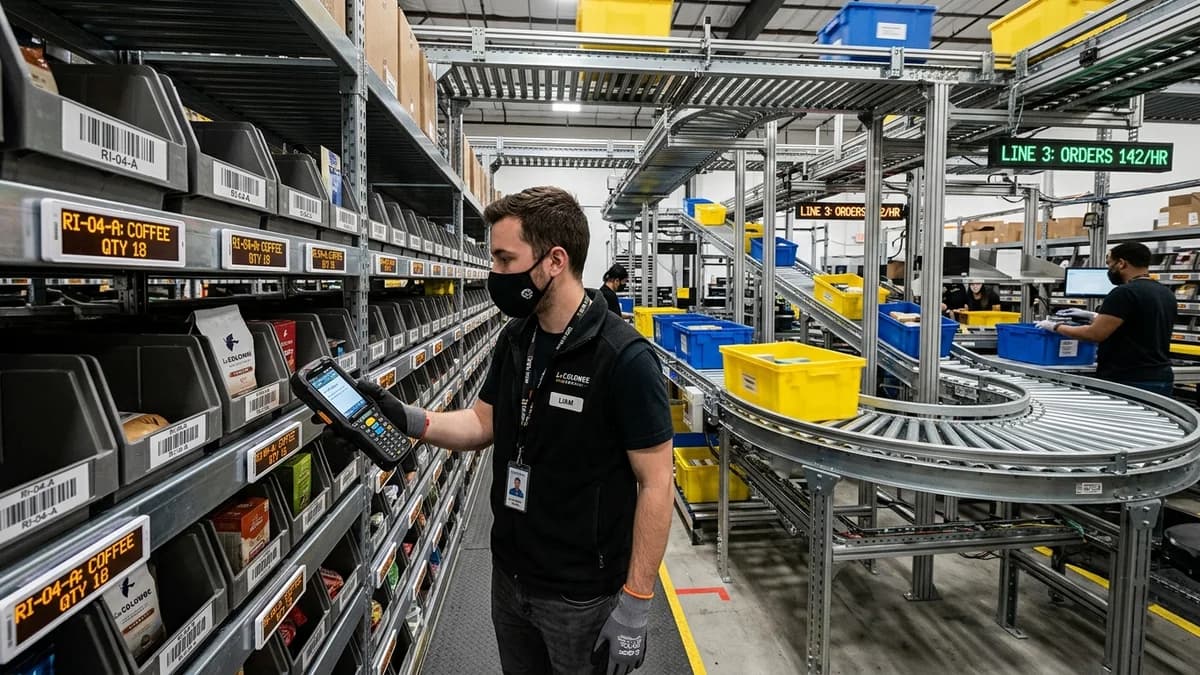
- Barcode-Driven Pick & Pack: Handheld picker terminals scan bin locations and product barcodes, preventing incorrect item substitutions.
- Optimal Aisle Routing: Algorithms sort pick tickets by warehouse shelf traversal order, minimizing picker walking distance inside dense micro-hubs.
- Dynamic Dispatch Queueing: Orders auto-assign to waiting couriers based on proximity, vehicle capacity, and batching efficiency.
- Centralized Hub Replenishment: Automated alerts trigger restock transfers from primary distribution centers when urban micro-hub counts drop below safety thresholds.
Dark Store Micro-Fulfillment vs Traditional Retail Storefronts
| Operational Factor | Urban Dark Store Micro-Hub | Traditional Supermarket Storefront |
|---|---|---|
| Order Assembly Time | Measure barcode-guided picking time on real order batches | Measure picking time in the actual retail layout |
| Aisle Layout Design | Optimized strictly for picker walking speed and density | Arranged for consumer browsing and impulse purchasing |
| Stock Accuracy Verification | Continuous cycle counts updated on every barcode scan | Periodic manual audits prone to shrinkage discrepancies |
| Delivery Radius | Dense 2 to 3-kilometer radius around urban hub | Broad 10 to 15-kilometer regional retail delivery zone |
| Customer Foot Traffic | Zero public entry; operational staff only | Open to public retail shoppers requiring cashiers |
The operational difference is where the inventory truth lives. A retail storefront can tolerate stock counts that drift and reconcile at the weekly cycle count because a shopper simply picks a different item from the shelf. A dark store cannot: an oversold item becomes a cancelled order, a refund and a lost customer, so stock has to decrement at cart confirmation rather than at dispatch.
Learn about our specialized FreshCart Grocery Delivery Platform and explore our Mobile Application Development Services.
Managing Sold-by-Weight Perishables
Handling fresh produce, meat, and artisanal cheeses introduces variable weight challenges. Modern micro-fulfillment systems integrate digital weighing scales directly with packing stations. When pickers weigh selected items, the system adjusts the final invoice amount within pre-authorized payment thresholds, ensuring exact billing.
Weight variance also has to survive into billing. A customer ordering one kilogram of tomatoes receives between 950 and 1,050 grams in practice, so the system needs a tolerance band, a re-priced invoice line at the actual picked weight, and a rule for when the difference is large enough to need customer approval. Platforms that model only fixed-unit SKUs push all of this onto WhatsApp and the picker's judgement.
Frequently Asked Questions
Launch Your Quick-Commerce Fulfillment Network
Master modern micro-fulfillment and rapid doorstep delivery. Review the TechDino FreshCart Platform or get in touch to scope your delivery application.
Frequently Asked Questions
How does the system prevent customer orders from routing to dark stores that are currently out of stock?
The customer mobile application geofences the user's location and only displays catalog inventory currently verified in stock at their assigned local fulfillment hub.
Can multiple delivery couriers be tracked simultaneously on an operations dashboard?
Yes. Dispatch managers monitor courier locations, delivery milestones, and transit times on an interactive WebSocket-powered live map.
How does the system manage cold-chain perishable expiration dates?
Batch tracking enforces first-in, first-out (FIFO) picking rules, alerting managers to discount items approaching expiry dates.
Is the micro-fulfillment software compatible with Android handheld rugged barcode terminals?
Yes. The picker terminal application runs smoothly on standard rugged warehouse Android devices with integrated laser barcode scanners.
The software in this article
FreshCart
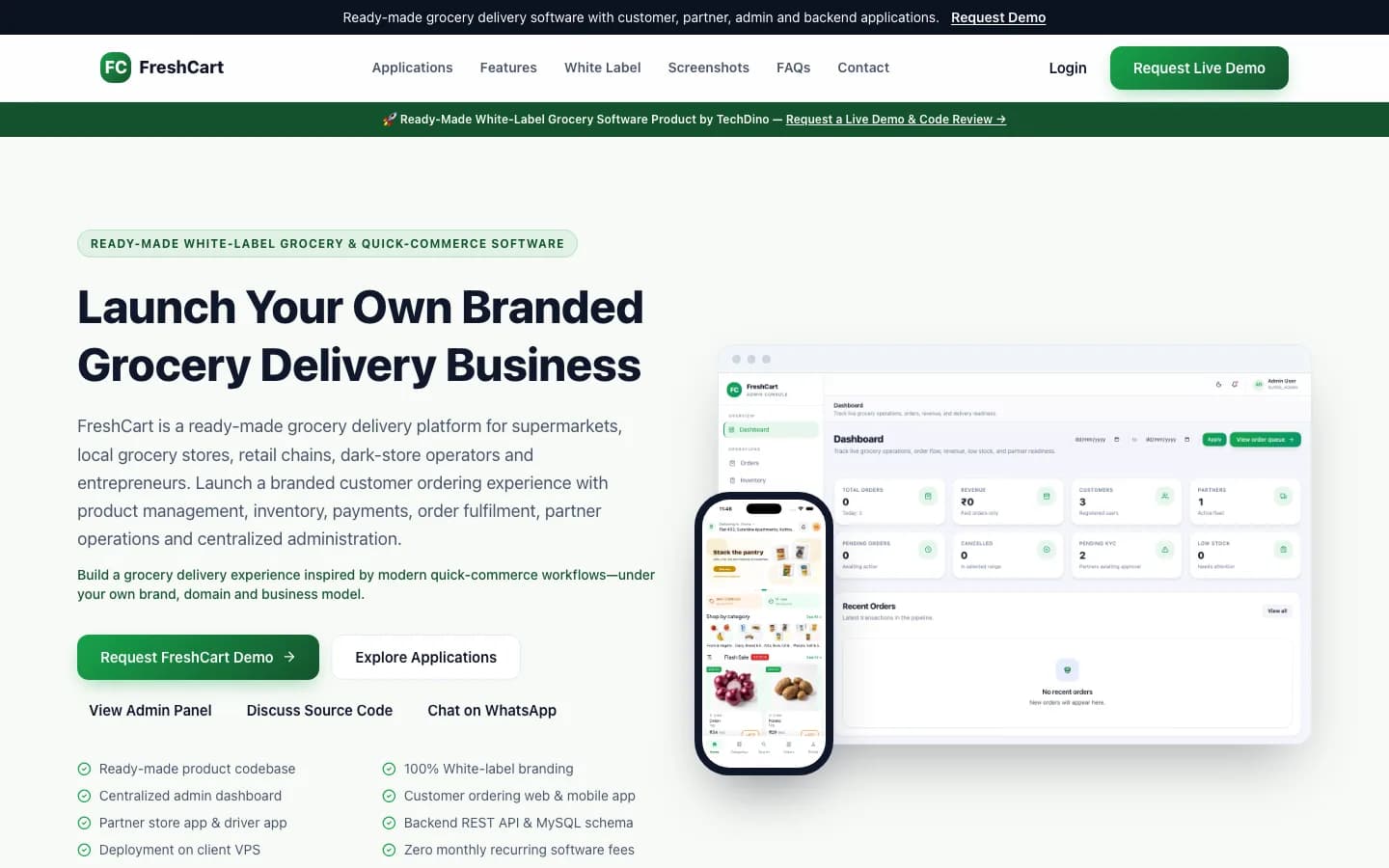
Launch your own branded grocery delivery or quick-commerce business with customer ordering applications, an admin dashboard, store and fulfilment workflows, delivery management, inventory controls, payments, offers and reporting.
Explore Next
- Learn about our mobile app development
Want FreshCart Under Your Brand?
Rebrand FreshCart with your logo and domain, or have it customized for your workflow. All quotes are customized and private.
Related Articles
Hyperlocal Quick-Commerce Grocery Delivery: Dark Store Architecture and Route Dispatch
A technical architecture guide to building a sub-30 minute quick-commerce grocery delivery platform with dark store bin picking and automated rider dispatch.
How to Launch a Scalable Multi-Vendor Marketplace with DinoCommerce
A step-by-step architectural guide to launching a multi-seller ecommerce marketplace with vendor portals, automated split payments, and shared catalogs.